
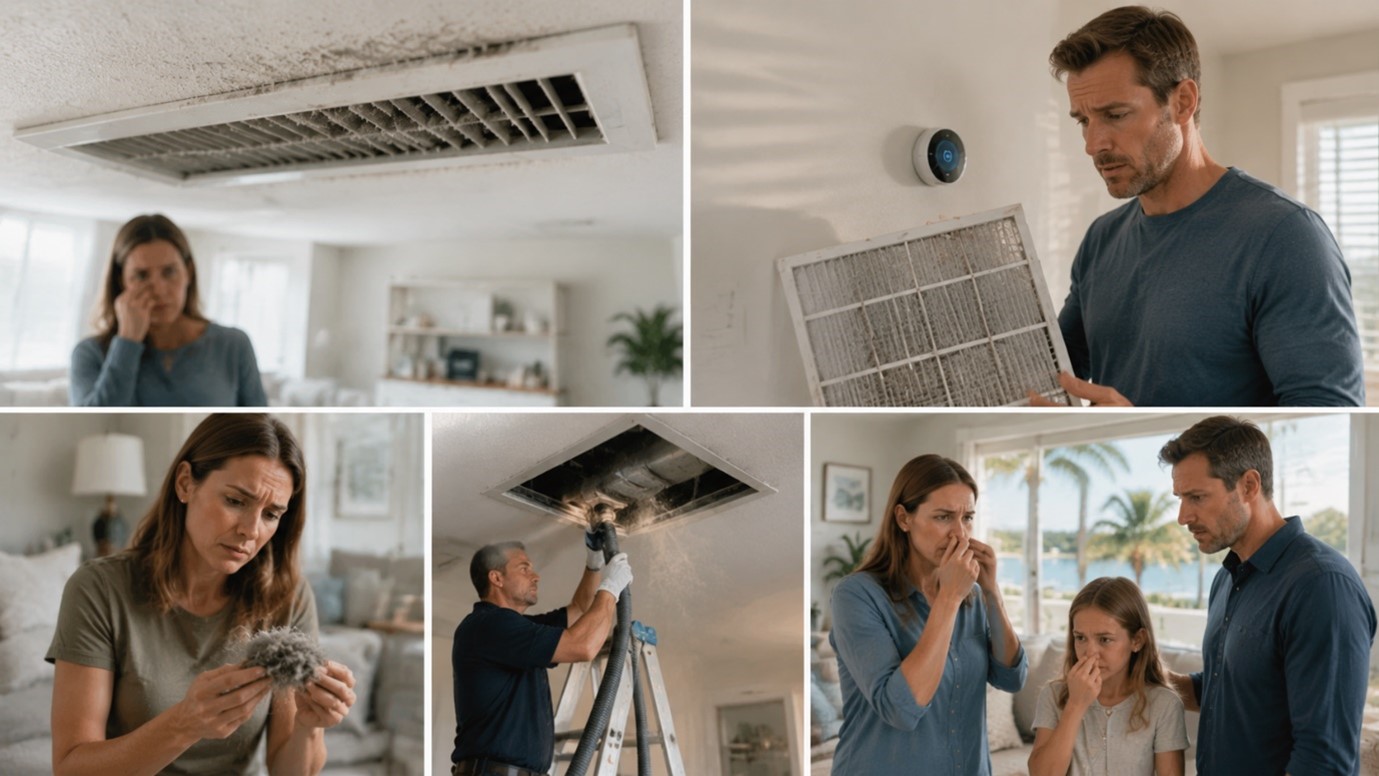
Have you ever wondered whether your HVAC system is truly keeping your home clean and fresh? Many homeowners overlook their ductwork, assuming that air flowing through vents is automatically safe. In reality, HVAC ducts can accumulate dust, allergens, mold, and debris over time. Knowing the signs your HVAC ducts need cleaning can save you money, improve indoor air quality, and enhance the efficiency of your system. In this article, we’ll guide you through common symptoms, practical solutions, and expert advice from All In One AC to maintain a healthy and efficient home.
Table of Contents
What Are HVAC Ducts and Why Cleaning Matters
HVAC ducts are channels that carry air from your heating and cooling system to every room in your home. Over time, these ducts can collect:
- Dust and dirt
- Pet hair and dander
- Mold or mildew
- Pollen and other allergens
Dirty ducts can make your AC and heating system work harder, increasing energy bills by up to 15% (U.S. Department of Energy, 2023). Additionally, contaminants circulating through your home can trigger allergies, asthma, and other respiratory issues. For homeowners in humid climates like South Florida, maintaining clean ductwork is crucial to prevent mold growth and maintain a comfortable indoor environment.
Key Signs Your HVAC Ducts Need Cleaning
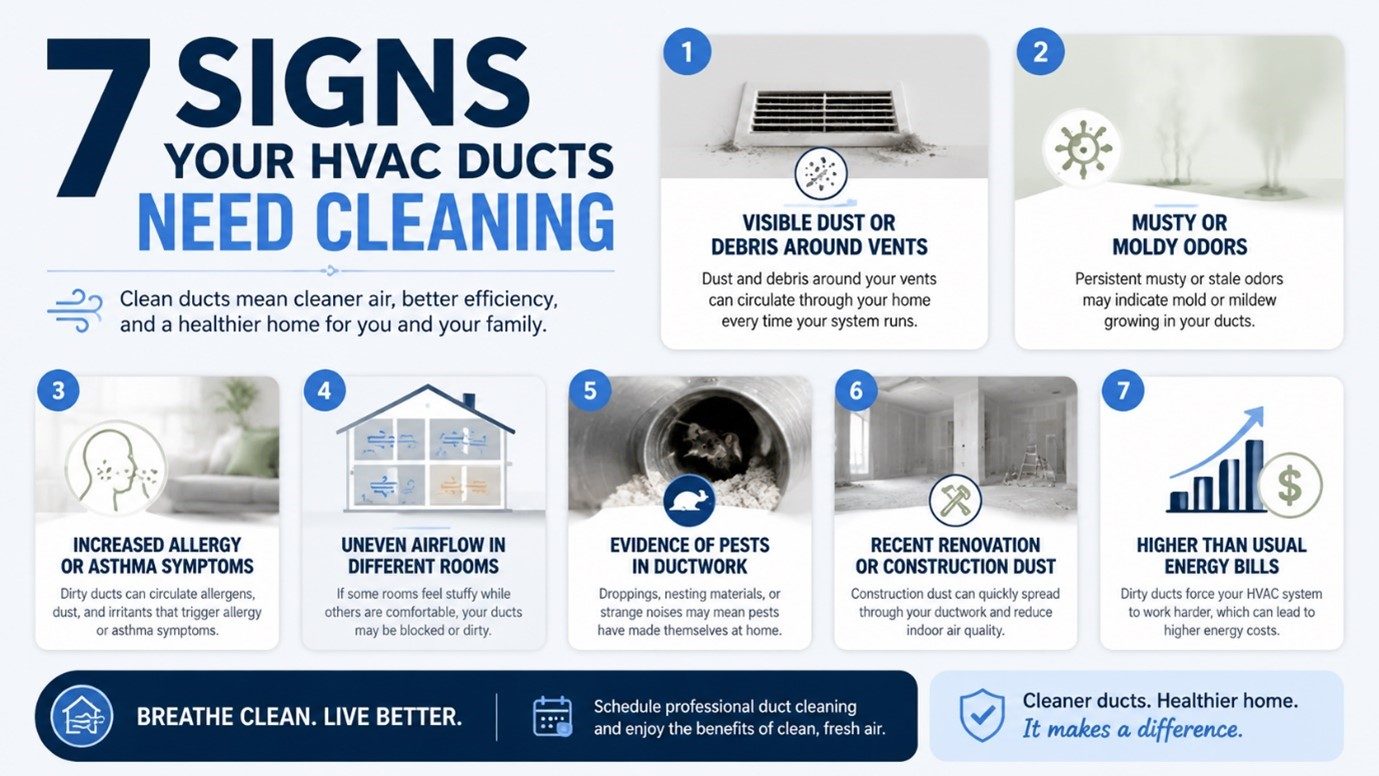
Recognizing the warning signs early can help you address duct problems before they affect your comfort and health. Here are the most common indicators:
- Visible Dust and Debris Around Vents: If dust escapes from your vents despite regular cleaning, it’s a sign that ducts are dirty.
- Unpleasant Odors: Musty, moldy, or stale smells when your AC or heater runs may indicate contamination in the ducts.
- Increased Allergy or Respiratory Symptoms: Sneezing, coughing, or worsened asthma in family members can result from dust, pollen, and mold in ducts.
- Uneven Airflow: Some rooms are colder or warmer than others, possibly due to blockage or buildup inside ducts.
- Rodent or Insect Droppings: Evidence of pests indicates contamination and potential structural damage.
- Recent Renovation or Construction: New construction dust can accumulate in ducts if not cleaned afterward.
Quick Facts
| Sign | What It Indicates |
| Dust Around Vents | Accumulation in ductwork |
| Musty or Moldy Odors | Possible mold or mildew |
| Allergy Flare-Ups | Dust, pollen, or dander buildup |
| Uneven Airflow | Blockage or debris inside ducts |
| Rodent or Insect Droppings | Contamination and structural risk |
| Post-Renovation Dust | Newly deposited debris |
How Dirty Ducts Affect AC Efficiency
Dirty ducts make your AC work harder to circulate air, which can lead to:
- Increased energy bills
- Reduced cooling or heating efficiency
- Premature wear and tear on system components
According to a 2023 Energy Star study, a system with heavily contaminated ducts can consume up to 15% more energy. Regular cleaning improves airflow, reduces strain, and extends the lifespan of your HVAC system.
How All In One AC Compares to DIY and Other Services
| Feature | All In One AC | Traditional Services | DIY Cleaning |
| Comprehensive Inspection | ✔ Certified technicians | ✖ Varies by company | ✖ Limited accuracy |
| Air Quality Testing | ✔ Included | ✖ Not standard | ✖ No equipment |
| Debris and Mold Removal | ✔ Professional tools | ✔ Varies | ✖ Risky and incomplete |
| Efficiency Check | ✔ System optimization | ✖ Not always included | ✖ Hard to measure |
| Safety | ✔ Full safety protocols | ✖ Varies | ✖ Potential hazards |
With All In One AC, you get expert guidance, proper cleaning techniques, and peace of mind that your ducts are free of contaminants.
Best Practices for HVAC Duct Maintenance
- Schedule professional inspections every 3–5 years.
- Replace air filters every 1–3 months to prevent accumulation.
- Keep vents and registers clean and unobstructed.
- Monitor humidity levels to prevent mold growth inside ducts.
- Ensure ductwork is sealed properly to maintain airflow efficiency.
Common Mistakes to Avoid
- Attempting DIY cleaning without proper equipment.
- Ignoring minor odors or dust buildup allows them to worsen.
- Skipping routine inspections even if the system seems fine.
- Using chemical cleaners that could damage ducts or introduce harmful fumes.
Limitations and Tradeoffs
While duct cleaning improves air quality and efficiency, it is not a cure-all for indoor air problems. High dust levels may also come from carpets, curtains, or pets. Cleaning too frequently is unnecessary unless contamination is evident. All In One AC evaluates your home to determine the best schedule and methods.
Conclusion
Dirty HVAC ducts can compromise air quality, comfort, and system efficiency. Recognizing the signs your HVAC ducts need cleaning and acting promptly can protect your family’s health and extend your system’s lifespan. Regular maintenance, combined with professional services from All In One AC, ensures your home stays cool, clean, and energy-efficient. Don’t wait for discomfort or rising bills; schedule a professional inspection today.
FAQ
Q1: How often should HVAC ducts be cleaned?
Typically, every 3–5 years, but more often if there are pets, mold, or high dust levels.
Q2: Can I clean ducts myself?
Minor vent cleaning is okay, but professional equipment is needed for thorough duct cleaning.
Q3: Will cleaning ducts reduce my energy bills?
Yes, improved airflow can reduce AC workload and save up to 15% on energy costs (Energy Star, 2023).
Q4: How do I know if mold is in my ducts?
Musty odors, visible spores, or allergy symptoms are common signs. Professional inspection is recommended.
Q5: Are all HVAC duct cleaning services the same?
No. All In One AC uses certified technicians, proper equipment, and follows safety protocols to ensure effective cleaning.
 Heading Sub Title
Leave a Reply