

Are you tired of seeing sky-high energy bills every summer? Learning how to lower your AC bill in Florida can save you hundreds of dollars a year. With a few smart adjustments and practical habits, you can keep your home cool without immediately replacing your air conditioner. In this guide, we’ll cover actionable tips, common mistakes to avoid, and how small changes make a big difference in your energy costs.
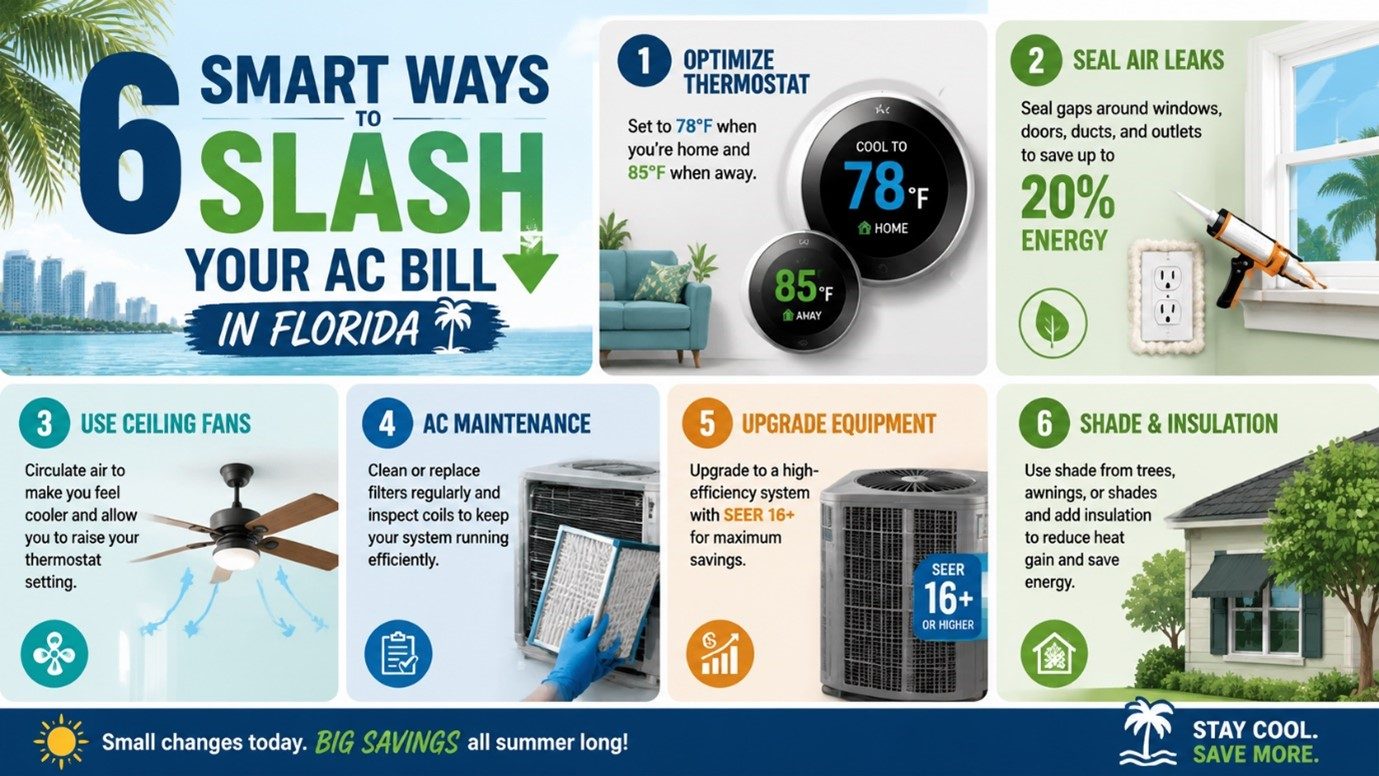
Table of Contents
What Is an AC Energy Bill?
Your AC energy bill reflects the electricity you use to cool your home. In Florida, air conditioning can account for 30 to 50 percent of a household’s energy usage (Energy Information Administration, 2024). Factors that influence your bill include unit efficiency, thermostat settings, insulation, and usage habits. Even small adjustments can have a noticeable impact on your monthly costs.
Why Lowering Your AC Bill Matters
High energy bills can be stressful, especially during Florida’s hot months. Lowering your bill not only saves money but also reduces wear and tear on your system. Many homeowners are pleasantly surprised by how much they can save simply by improving airflow, sealing leaks, or scheduling regular maintenance.
Practical Ways to Lower Your AC Bill
Here’s how you can start saving immediately:
- Optimize Your Thermostat: Keep it at 78°F while home and 85°F while away to reduce energy usage (U.S. Department of Energy, 2023).
- Seal Air Leaks: Gaps around doors, windows, and ducts can raise energy bills by up to 20% (Florida Energy Systems Consortium, 2023).
- Use Ceiling Fans: Circulating air helps you feel cooler without lowering the thermostat.
- Regular AC Maintenance: Clean filters, inspect coils, and schedule yearly checkups. Proper maintenance can cut energy use by 10–15% (All In One AC internal data, 2024).
- Upgrade Equipment if Needed: Consider a SEER 16+ unit for long-term savings if your AC is outdated.
- Enhance Shade and Insulation: Closing blinds and adding insulation reduces heat gain and eases AC workload.
How to Lower Your AC Bill in Florida (Key Takeaways)
| Tip | Impact |
| Optimize Thermostat | Up to 15% energy savings |
| Seal Air Leaks | Prevent 10–20% energy loss |
| Use Ceiling Fans | Improved comfort, minor savings |
| Regular Maintenance | 10–15% more efficient |
| Upgrade Equipment | Long-term energy reduction |
| Shade & Insulation | Reduces AC workload |
How All In One AC Compares to Traditional Options
| Feature | All In One AC | Traditional AC Services | DIY Maintenance |
| Regular Inspections | ✔ Included | Sometimes optional | ✖ Requires personal effort |
| Energy Audit | ✔ Included | ✖ Not standard | ✖ DIY tools only |
| Filter Replacement | ✔ Automated reminders | ✖ Customer must track | ✖ Personal responsibility |
| Cost Efficiency | High long-term savings | Varies by provider | Medium savings but requires effort |
| Expertise | Certified Florida HVAC techs | General contractors | Dependent on homeowner knowledge |
All In One AC combines professional guidance with practical solutions so you can lower energy usage efficiently and avoid costly mistakes.
How to Lower Your AC Bill in Florida (Best Practices)
- Close vents in unused rooms.
- Use programmable thermostats to schedule cooling efficiently.
- Keep doors and windows closed while the AC is running.
- Avoid using heat-generating appliances during peak hours.
- Schedule regular professional maintenance for optimal efficiency.
How to Lower Your AC Bill in Florida (Common Mistakes to Avoid)
- Setting the thermostat too low, thinking it cools faster.
- Ignoring dirty filters, which can increase energy usage by 15% (U.S. Department of Energy, 2023).
- Overlooking duct leaks that waste cooled air.
- Over-relying on fans instead of optimizing AC settings.
Limitations and Tradeoffs
While many strategies save energy, some require upfront effort or investment, like insulation upgrades or a new high-efficiency AC. Florida’s extreme heat may limit how high you can set your thermostat comfortably. All In One AC helps identify the best balance between comfort and savings.
Conclusion
How to lower your AC bill in Florida doesn’t have to be complicated. From simple thermostat adjustments and sealing leaks to scheduling maintenance and improving insulation, every step contributes to noticeable savings. By combining practical habits with professional guidance from All In One AC, you can enjoy a cooler home and lower energy bills all summer. Start implementing these tips today and watch your energy costs drop.
FAQ
Q1: How much can I save by adjusting my thermostat?
Homeowners can save 10–15% annually by maintaining 78°F in the home (U.S. Department of Energy, 2023).
Q2: How often should AC filters be replaced?
Typically, every 1–3 months, depending on usage and air quality.
Q3: Does sealing ductwork make a difference?
Yes, it can prevent 10–20% energy loss, improving overall AC efficiency (Florida Energy Systems Consortium, 2023).
Q4: When should I consider replacing my AC?
Replace if your AC is over 10–15 years old or inefficient. Professional guidance helps determine the best timing.
Q5: Can ceiling fans replace AC entirely?
Fans enhance comfort but cannot replace AC in Florida heat. They work best alongside optimized AC use.
 Heading Sub Title
Leave a Reply