
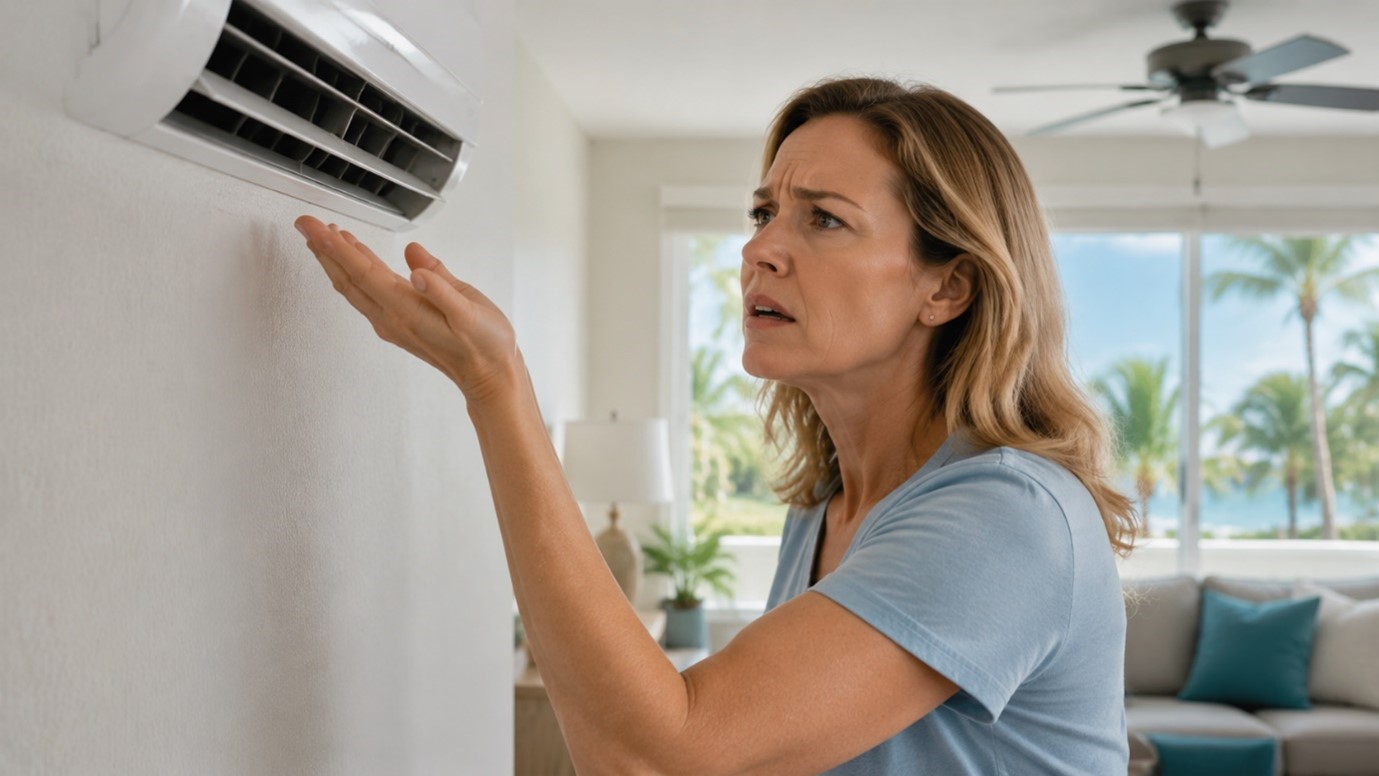
Is your AC running, but ac not blowing cold air? You are not alone. Many South Florida homeowners experience this frustrating problem, especially during the hot summer months. In this guide, we’ll explore the most common causes of AC not blowing cold air, practical solutions, and expert tips to restore cool comfort to your home without panic.
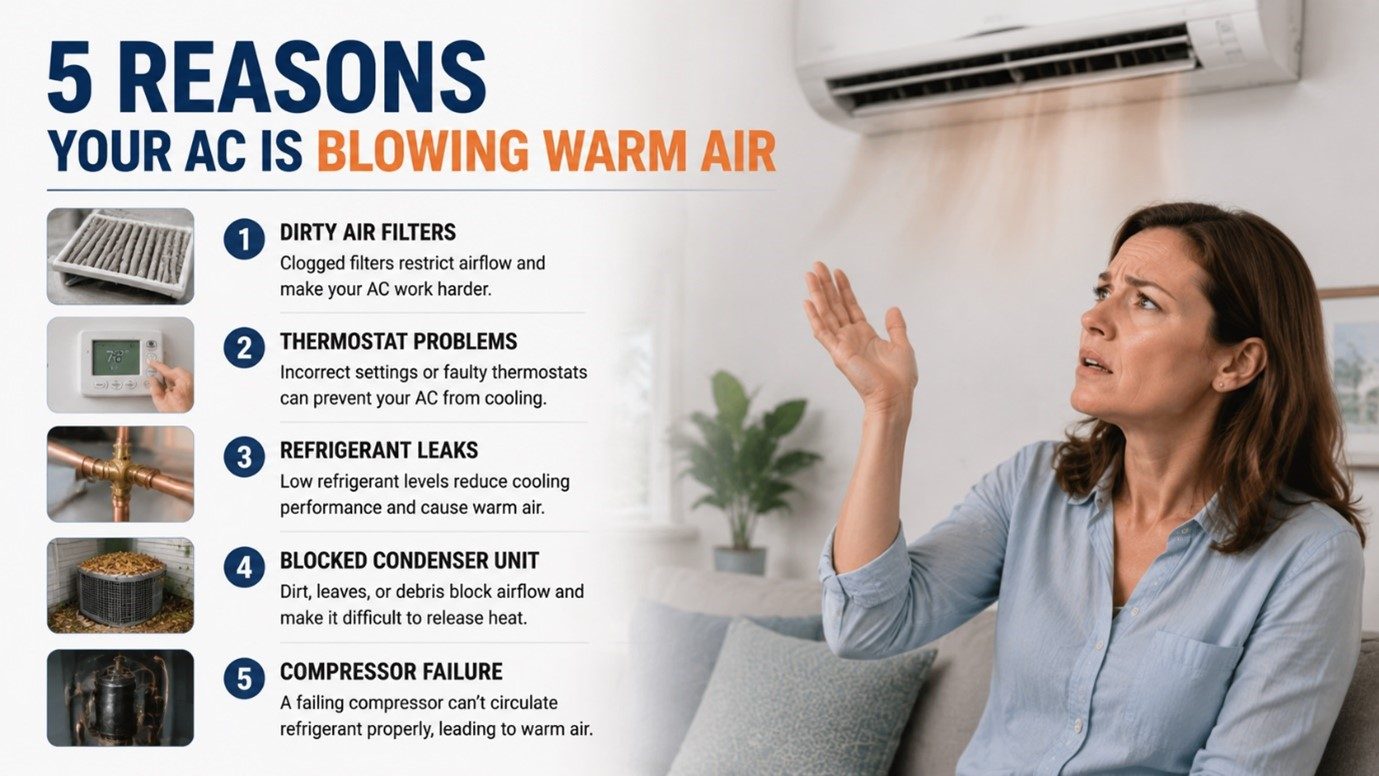
Table of Contents
What Does It Mean When AC Blows Warm Air?
When your AC is on but only warm air comes out, it signals a problem with the cooling cycle. Causes range from simple issues like dirty filters to more complex problems such as refrigerant leaks or compressor failure. Addressing the problem quickly can prevent costly repairs and improve energy efficiency.
If your AC not blowing cold air, diagnosing the issue early can save you time and money. Regular checks are essential to ensure your system functions smoothly.
Understanding why your AC not blowing cold air can help you troubleshoot effectively. Knowledge about common causes equips you to deal with this issue proactively.
Common Reasons Your AC Isn’t Cooling
When troubleshooting an AC not blowing cold air, consider checking all electrical connections as well. Issues in wiring can impede performance.
- Dirty Air Filters: Clogged filters reduce airflow and can cause your unit to blow warm air. Replace filters every 1–3 months (U.S. Department of Energy, 2023).
- Thermostat Issues: Incorrect settings or faulty thermostats can prevent proper cooling. Verify the temperature and consider upgrading to a programmable thermostat.
- Refrigerant Leak: Low refrigerant can reduce cooling power. Professional inspection is required to refill and check for leaks.
- Blocked Condenser Unit: Outdoor units covered in debris or leaves lose efficiency and may fail to cool.
- Compressor Problems: A malfunctioning compressor stops the cooling cycle. This often requires professional repair or replacement.
Quick Fixes
| Problem | Simple Fix |
| Dirty Air Filter | Replace with a clean filter |
| Thermostat | Check settings or reset |
| Refrigerant Leak | Call a certified technician |
| Blocked Condenser | Clear debris around unit |
| Compressor | Professional repair required |
In scenarios where your AC not blowing cold air, ensure the thermostat is functioning correctly, as this can greatly affect cooling performance.
How All In One AC Compares to DIY Troubleshooting
| Feature | All In One AC | DIY Troubleshooting | Traditional AC Services |
| Accurate Diagnosis | ✔ Certified HVAC techs | ✖ Limited knowledge | ✖ Varies |
| Safety | ✔ Follow safety standards | ✖ Risk of injury | ✖ Varies |
| Efficiency Fix | ✔ Optimized solution | ✖ Temporary fixes | ✔ Variable results |
| Cost Transparency | ✔ Detailed upfront | ✖ Hidden costs possible | ✔ Varies |
| Peace of Mind | ✔ Guaranteed quality | ✖ Stressful | ✔ Varies |
All In One AC ensures accurate diagnosis and fixes while keeping your home safe and energy-efficient.
Best Practices to Prevent AC From Blowing Warm Air
- Replace filters regularly.
- Schedule professional maintenance yearly.
- Keep the thermostat calibrated and away from heat sources.
- Keep the condenser unit free from debris.
- Monitor your AC for unusual noises or odors early.
Common Mistakes to Avoid
- Running the AC continuously while it blows warm air.
- Attempting DIY repairs on compressors or refrigerant systems.
- Ignoring small airflow issues that worsen over time.
- Skipping professional inspection after repeated problems.
Limitations and Tradeoffs
Sometimes, even after fixing the immediate problem, older AC units may not restore full efficiency. Repair may extend life temporarily, but replacement could be more cost-effective in the long run. All In One AC provides guidance on whether repair or replacement is the best solution.
Conclusion
An AC that runs but does not cool can be frustrating. If your AC not blowing cold air, most issues have clear solutions. By addressing filters, thermostats, airflow, and refrigerant issues promptly, and consulting experts like All In One AC, you can restore comfort and avoid high energy costs. Pay attention to early warning signs and maintain your system to stay cool all summer.
FAQ
Q1: Why is my AC running but not cooling?
Common causes include dirty filters, thermostat issues, refrigerant leaks, or compressor problems.
Q2: Can I fix it myself?
Simple fixes like changing filters are safe, but refrigerant or compressor issues need certified professionals.
Q3: How often should AC filters be replaced?
Every 1–3 months, depending on usage and air quality.
Considering the limitations of your AC unit is essential when faced with the problem of it ac not blowing cold air, as older models may require replacement for optimal performance.
Q4: Is repair always cheaper than replacement?
Not always. Older units may cost more in repeated repairs than installing a new, efficient system.
Q5: How do I prevent this issue in the future?
Regular maintenance, proper airflow, and timely professional inspections help prevent cooling issues.
 Heading Sub Title
Leave a Reply