
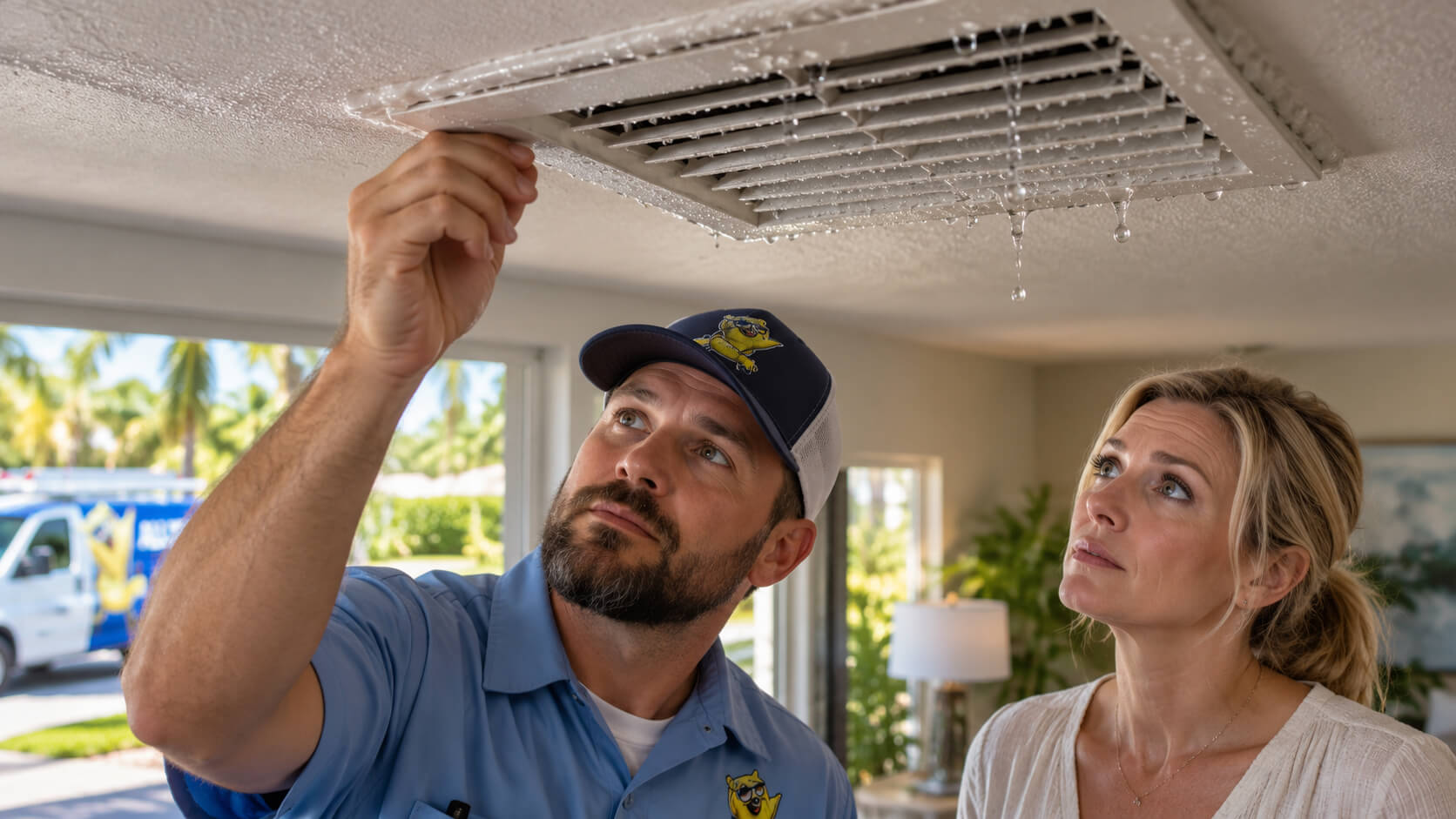
AC vents sweating in Florida are usually a moisture warning rather than a simple cosmetic issue.
You might notice droplets on a ceiling register, damp drywall, brown stains around the vent, or moisture forming where the duct boot meets the ceiling.
The basic process is condensation.
Warm, humid air touches a cold surface and water forms.
The real question is why warm, moisture-filled air is reaching that cold HVAC surface.
Table of Contents
Is Condensation Around an AC Vent Normal?
Small amounts of temporary condensation may occur during extreme humidity.
Regular dripping or repeated ceiling stains should not be considered normal.
Persistent moisture can damage:
- Paint
- Drywall
- Insulation
- Wood
- Nearby building materials
It may also indicate a duct, humidity, airflow, or insulation problem.
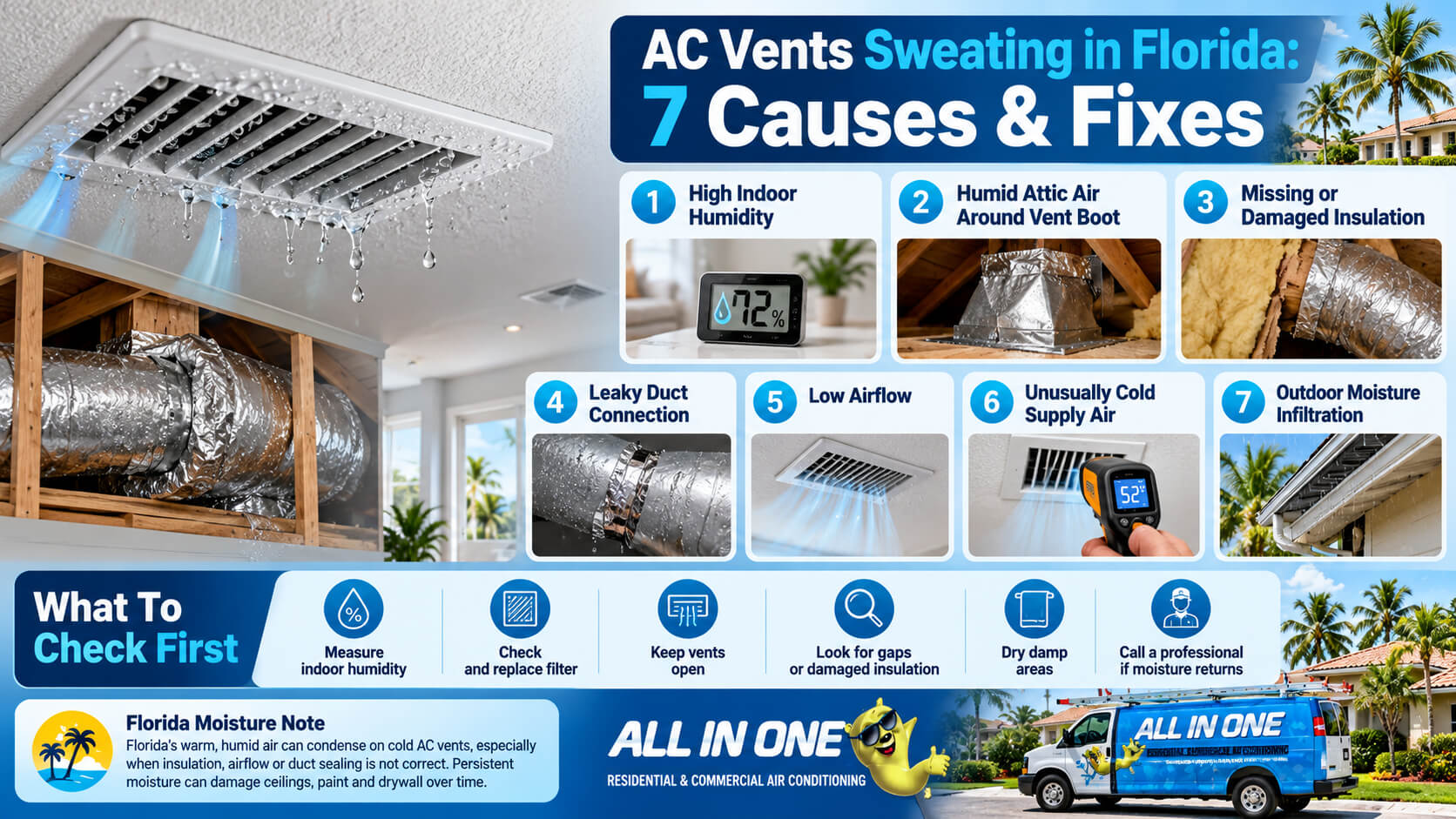
1. Indoor Humidity Is Too High
Florida naturally has a high outdoor moisture load.
If indoor humidity remains elevated, cold supply registers are more likely to fall below the dew point and collect condensation.
A basic hygrometer can help track indoor relative humidity.
2. Humid Attic Air Is Reaching the Vent Boot
Many ceiling supply registers connect to metal boots located beside a hot Florida attic.
If gaps exist around the boot, humid attic air can contact the cold metal surface.
Condensation can then develop around the ceiling register.
3. Duct Insulation Is Missing or Damaged
Insulation separates cold duct surfaces from warm surrounding air.
If insulation becomes damaged, compressed, displaced, or poorly installed, condensation may form on the duct or boot.
That moisture can eventually reach drywall.
4. The Duct Connection Is Leaking
Loose duct connections allow conditioned air to escape and humid attic air to enter.
This can reduce HVAC efficiency while increasing the chance of condensation.
Duct sealing may be necessary when leaks are discovered.
5. Airflow Is Too Low
Restricted airflow can create abnormal HVAC temperatures.
Common causes include:
- Dirty filters
- Blocked return grilles
- Closed supply vents
- Dirty evaporator coils
- Blower problems
- Duct restrictions
If sweating vents occur alongside weak airflow, the problems may be related.
6. Supply Air Is Unusually Cold
Cold supply air combined with high indoor humidity increases condensation risk.
This does not automatically mean the thermostat setting is responsible.
Refrigerant performance, airflow, controls, and equipment operation can all affect supply temperatures.
7. Outdoor Moisture Is Entering the Home
Humid outdoor air may enter through:
- Door gaps
- Windows
- Attic penetrations
- Poor weather sealing
- Duct leaks
- Building envelope gaps
If moisture continuously enters the house, the AC may struggle to maintain comfortable humidity.
What to Check First
Measure Indoor Humidity
Use a hygrometer to determine whether the problem affects the entire home.
Check the Filter
Replace a visibly dirty filter.
Keep Vents Open
Avoid blocking return grilles or closing many supply registers.
Inspect for Visible Gaps
Look around ceiling registers for obvious gaps between the boot and drywall.
Dry Damp Areas
Do not allow building materials to stay wet while waiting for the HVAC cause to be corrected.
What Not to Do
Do not simply paint over recurring water stains.
Do not ignore repeated condensation.
Do not randomly add insulation around HVAC or electrical equipment without understanding where the moisture originates.
When Sweating Vents Need Professional Inspection
Arrange HVAC service when:
- Multiple vents are sweating
- Ceiling stains continue growing
- Indoor humidity stays high
- Airflow is weak
- Rooms cool unevenly
- Musty odors develop
- Refrigerant lines freeze
- AC runtime becomes unusually long
All In One AC provides residential HVAC services for airflow, ductwork, moisture, and cooling problems.
Preventing AC Vent Condensation
Depending on the cause, prevention may include:
- Controlling indoor humidity
- Sealing duct connections
- Sealing gaps around boots
- Repairing insulation
- Correcting airflow restrictions
- Maintaining clean filters
- Servicing coils and blowers
- Reducing humid outdoor air infiltration
FAQs
Why are my AC vents sweating in Florida?
Warm humid air is contacting a cold HVAC surface. Common reasons include high humidity, duct leakage, damaged insulation, attic air infiltration, or low airflow.
Can sweating vents damage the ceiling?
Yes. Recurring moisture can stain or damage drywall and other nearby materials.
Does vent sweating mean my AC is too cold?
Not necessarily. Condensation depends on both temperature and humidity.
Will replacing the grille fix the problem?
Usually not. The underlying humidity, duct, insulation, or airflow problem must be corrected.
Conclusion
AC vents sweating in Florida should be treated as a clue that moisture is reaching a cold HVAC surface.
High humidity, duct leakage, insulation problems, or restricted airflow may all contribute.
If condensation continues after simple checks, All In One AC can inspect the HVAC and duct system to determine why moisture keeps returning.
 Heading Sub Title
Leave a Reply