
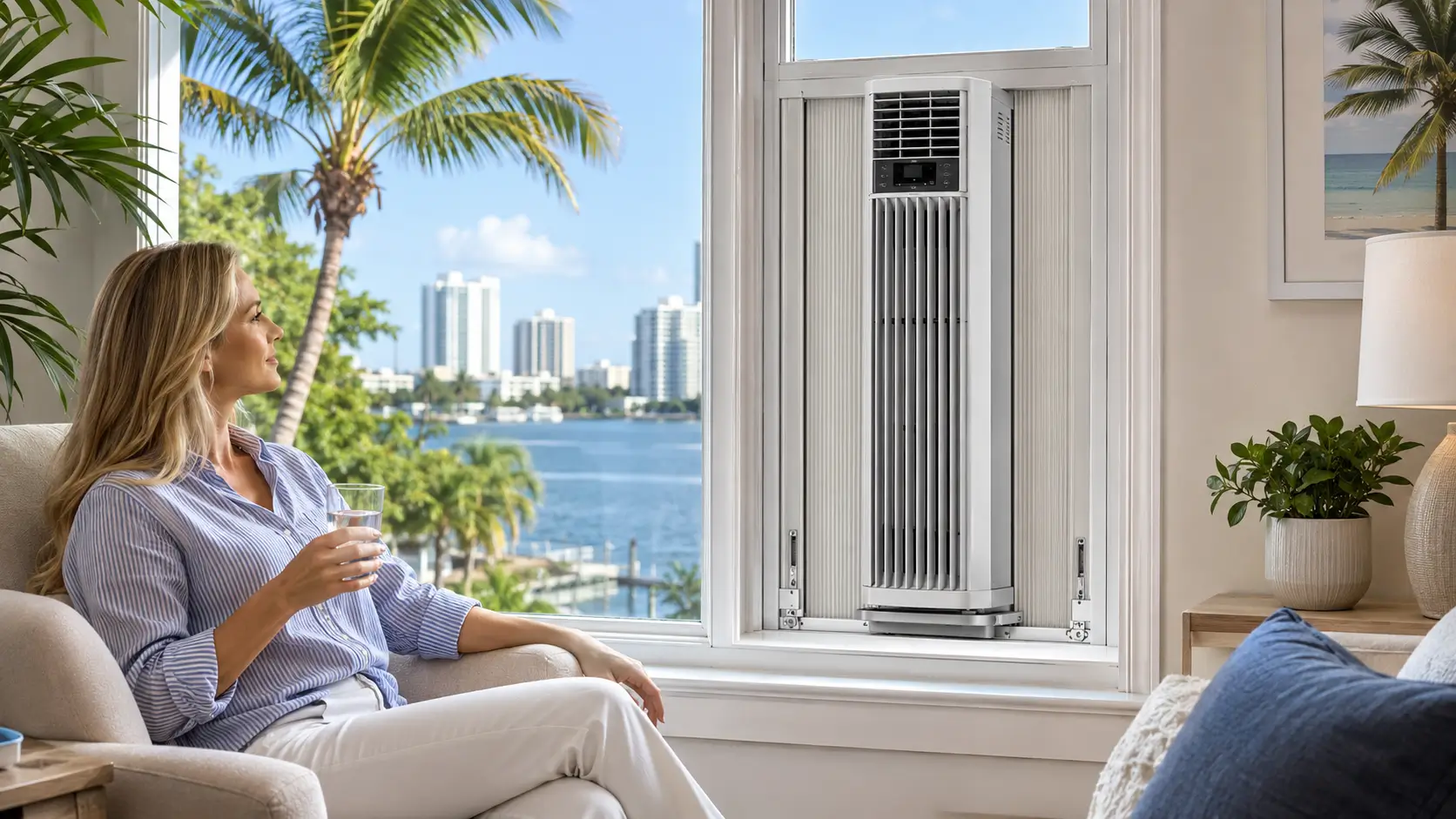
If you have ever stood in front of a tall, narrow casement or slider window and wondered how on earth you are going to fit an air conditioner in it, you are not alone. Standard horizontal window ACs simply were not built for vertical openings. The good news? A growing lineup of units is designed specifically for exactly this situation, offering powerful, efficient cooling without forcing you to compromise on installation or airflow. For expert guidance on choosing the right cooling solution, All In One AC helps homeowners find reliable options that match their specific needs.
In this guide, we will walk you through the 7 best window AC for vertical windows, what features to prioritize before you buy, how to install correctly, and how to maintain your unit for long lasting performance.
Table of Contents
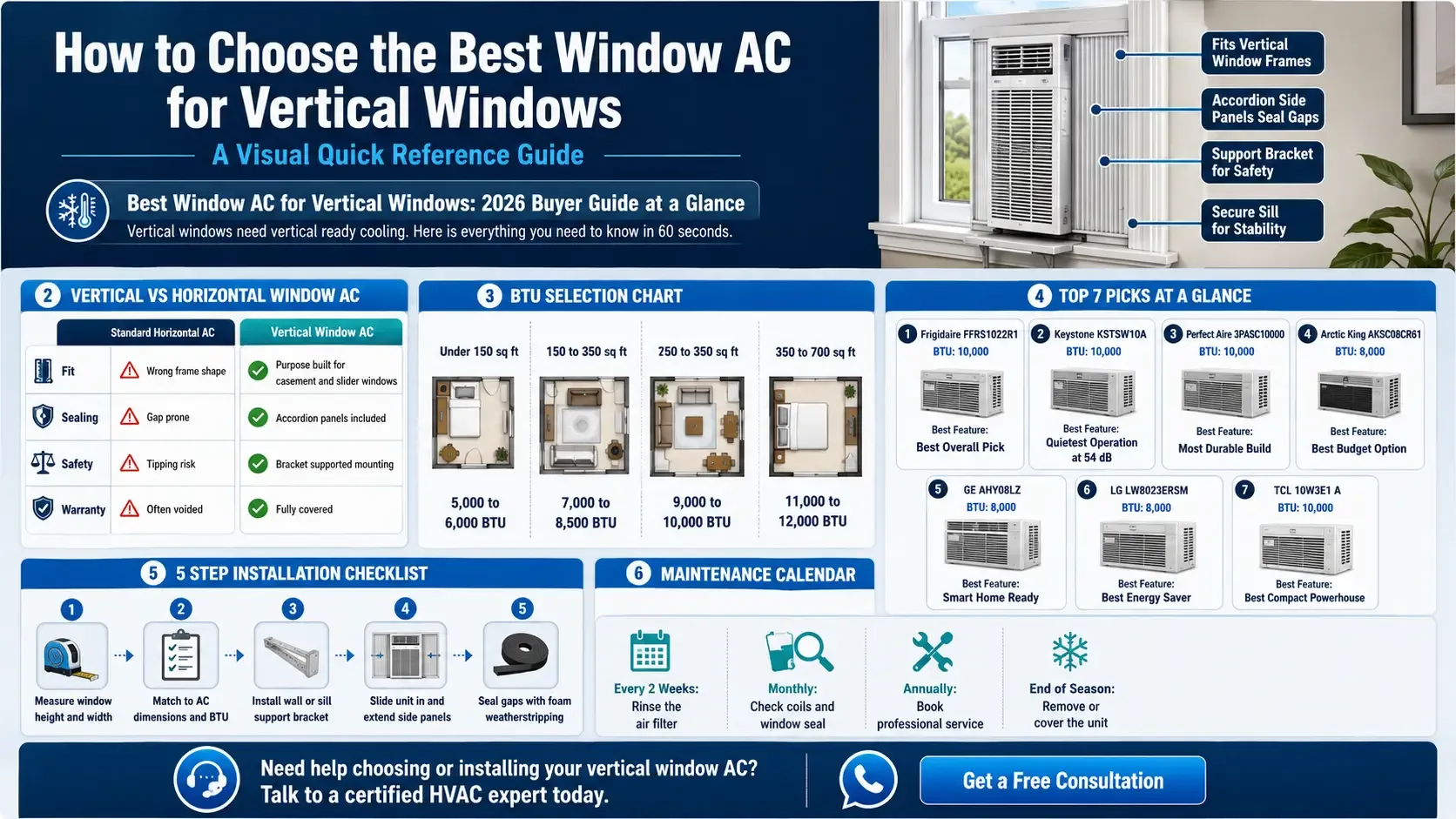
Why Standard ACs Do Not Work for Vertical Windows
Most traditional window air conditioners are engineered to slide into double hung, horizontal windows, the kind that open up and down. Vertical windows, including casement windows, which crank open sideways, and slider windows, which move horizontally, have a completely different profile.
Forcing a standard unit into a vertical opening can result in:
- Poor sealing, causing cool air to escape and energy bills to spike
- Structural strain on the window frame
- Dangerous tipping or instability during operation
- Voided manufacturer warranties
That is why choosing a unit built and rated for vertical or casement windows is not just a preference. It is a practical necessity for both safety and efficiency.
What to Look for in the Best Window AC for Vertical Windows
Before spending a dollar, run through these five buying criteria.
Window Compatibility and Dimensions
Always measure your window opening’s exact height and width before shopping. Vertical window ACs are designed to fit within narrower frames, but models vary. Look for units with included side panels or expansion kits to seal the gap between the unit and the window frame.
BTU Rating
BTUs determine how much space a unit can effectively cool.
Room Size and Recommended BTUs
- Up to 150 sq ft: 5,000 to 6,000 BTU
- 150 to 350 sq ft: 7,000 to 8,500 BTU
- 350 to 550 sq ft: 9,000 to 10,000 BTU
- 550 to 700 sq ft: 11,000 to 12,000 BTU
Oversizing is just as problematic as undersizing. An oversized unit will short cycle, meaning it turns off before removing enough humidity, leaving a room feeling clammy even when the temperature drops.
Energy Efficiency Ratio and Energy Star Certification
The higher the EER, the less electricity the unit consumes per BTU of cooling. An Energy Star certified model typically uses 10 to 15 percent less energy than models without certification, which adds up significantly over an entire cooling season.
Noise Output
For bedrooms and home offices, look for models rated at 52 to 56 dB or lower. Units above 60 dB can feel disruptive, especially during quiet hours.
Smart Features and Convenience Options
Modern vertical window ACs often include:
- Wi Fi connectivity for smartphone or voice control with Amazon Alexa or Google Assistant
- Programmable 24 hour timers
- Multiple fan speed settings
- Sleep mode for quieter, gradual temperature adjustment
- Built in dehumidification
Top 7 Best Window AC for Vertical Windows 2026
1. Frigidaire FFRS1022R1 Slider and Casement Room AC Best Overall
The Frigidaire FFRS1022R1 consistently earns its place at the top of any vertical window AC list. Engineered specifically for slider and casement window configurations, it combines genuine cooling punch with installation simplicity.
Key Specs:
- BTU: 10,000
- EER: 10.4
- Window Type: Slider and Casement
- Noise Level: about 55 dB
Why We Like It:
The inclusion of a programmable 24 hour timer, multi speed fan control, and remote lets you set it and forget it. The factory designed side curtains create a secure seal around the opening, eliminating the improvised foam and tape approach many homeowners resort to with ill fitting units.
Best For:
Living rooms, home offices, and medium sized bedrooms in need of reliable, all day cooling.
2. Keystone KSTSW10A Best for Quiet Operation
If noise is a dealbreaker, the Keystone KSTSW10A is the unit to consider. Running at just 54 dB even at full power, it is among the quietest options in its BTU class.
Key Specs:
- BTU: 10,000
- Noise Level: 54 dB
- Energy Star Certified: Yes
Why We Like It:
Beyond its hushed operation, the Keystone includes an energy saving mode that automatically cycles the fan off when the compressor is not running, cutting electricity use without any sacrifice in comfort. Its sleep mode gradually raises the set temperature overnight to prevent overcooling while you rest.
Best For:
Bedrooms, nurseries, and any space where a good night sleep takes priority.
3. Perfect Aire 3PASC10000 Best for Durability
The Perfect Aire 3PASC10000 is built with longevity in mind. Its sturdy chassis and washable, reusable air filter keep operating costs low while the unit holds up through multiple cooling seasons.
Key Specs:
- BTU: 10,000
- Dehumidification: Yes
- Filter Type: Washable and Reusable
Why We Like It:
The built in dehumidification mode doubles its value in humid climates, pulling moisture from the air even when full cooling mode is not necessary. The remote control and multi speed fan round out a no fuss feature set.
Best For:
Homeowners who want a solid, low maintenance unit that delivers year after year without frequent repairs or filter replacements.
4. Arctic King AKSC08CR61 Casement AC Best Budget Pick
Not every cooling solution needs to break the bank. The Arctic King AKSC08CR61 punches above its price point for smaller spaces, offering Energy Star certified efficiency at one of the most accessible price points in this category.
Key Specs:
- BTU: 8,000
- Energy Star Certified: Yes
- Weight: Lightweight and Easy to Handle
Why We Like It:
Its compact, lightweight design makes solo installation genuinely achievable. No second person is required. Simple, intuitive controls eliminate the learning curve, making it a strong choice for renters or anyone who needs a quick, affordable cooling fix.
Best For:
Studio apartments, small bedrooms, and renters who need an affordable, easy to install solution.
5. GE AHY08LZ Smart Window AC Best for Smart Home Integration
Tech forward homeowners will appreciate everything the GE AHY08LZ brings to the table. This unit integrates seamlessly with Amazon Alexa and Google Assistant, letting you adjust temperature, fan speed, and mode entirely by voice or smartphone app.
Key Specs:
- BTU: 8,000
- Wi Fi Enabled: Yes
- Compatible With: Amazon Alexa and Google Assistant
Why We Like It:
The SmartHQ app gives you remote access from anywhere, which is useful for pre cooling your space before you arrive home on a hot afternoon. The energy saving mode and programmable timer further reduce consumption without requiring constant manual adjustments.
Best For:
Smart home enthusiasts, remote workers, and anyone who wants maximum control with minimum effort.
6. LG LW8023ERSM Best for Energy Savings
LG dual inverter technology sets the LW8023ERSM apart from conventional fixed speed compressor units. Instead of switching on and off repeatedly, the variable speed compressor adjusts its output to maintain a steady temperature, using less electricity and creating less wear on internal components over time.
Key Specs:
- BTU: 8,000
- Energy Star Certified: Yes
- Refrigerant: Eco Friendly R 32
- Noise Level: Low
Why We Like It:
The R 32 refrigerant has a lower global warming potential than older refrigerant types, making this model the most environmentally responsible pick on this list. Its inverter compressor also means the unit runs quieter during steady state operation compared to traditional units.
Best For:
Environmentally conscious buyers, long term homeowners focused on lower utility bills, and anyone who values quiet, consistent cooling.
7. TCL 10W3E1 A Casement Window AC Best Compact Powerhouse
The TCL 10W3E1 A manages to squeeze serious cooling performance into a slim, installation friendly form factor. At 10,000 BTUs with a 24 hour timer and multiple fan speeds, it offers top tier functionality without the bulk.
Key Specs:
- BTU: 10,000
- Dehumidification Rate: 2.5 pints per hour
- Timer: 24 hour programmable
- Fan Speeds: Multiple
Why We Like It:
The above average dehumidification rate makes it ideal for muggy climates where humidity is as much of a problem as heat. Its compact chassis installs into tighter vertical window openings where bulkier units simply will not fit.
Best For:
High humidity regions, compact vertical windows with limited clearance, and users who want maximum BTUs in the smallest possible footprint.
Benefits of Using a Purpose Built Vertical Window AC
Choosing a unit specifically engineered for vertical windows delivers advantages that extend well beyond just it fits.
Better Air Circulation
Units designed for vertical openings project airflow across the room more effectively than a mismatched horizontal unit propped awkwardly in a non standard window.
Lower Long Term Cost
A properly sealed, correctly sized unit runs fewer cycles to maintain temperature, translating directly into lower electricity bills month over month.
Eco Friendly Options Available
Several models on this list feature Energy Star certification and low GWP refrigerants, reducing your carbon footprint alongside your energy costs.
Space Preservation
Unlike portable AC units that require floor space and exhaust hose management, window mounted units keep your floor plan completely open.
Minimal Structural Impact
Unlike central AC systems or mini splits, window AC installation requires zero permanent modification to walls, ceilings, or ductwork.
Step by Step Installation Tips for Best Window AC for Vertical Windows
Follow these steps for a safe, efficient install.
Step 1: Measure Twice and Buy Once
Record the exact height, width, and sill depth of your window opening before selecting a model. Cross reference these measurements with the unit listed minimum and maximum window dimensions.
Step 2: Gather Your Materials
You will typically need a screwdriver, foam weatherstripping tape, and the mounting hardware included with your unit. Have a second person on hand for units heavier than 50 lbs.
Step 3: Install the Window Bracket First
Most vertical window ACs include a support bracket that attaches to the window sill or frame to bear the unit weight. Install and secure this before placing the AC.
Step 4: Slide the Unit into Position
With the bracket in place, carefully lower the AC into the window opening and engage the mounting latch or security screws.
Step 5: Extend the Side Panels
Pull out the accordion style side panels or foam inserts to fill the gap between the unit and the window frame on both sides. Seal any remaining gaps with foam weatherstripping.
Step 6: Secure and Test
Lock any safety pins or window locks to prevent the unit from shifting. Plug in and run on fan only mode for a few minutes to verify airflow before switching to cooling.
Maintenance Guide to Maximize Lifespan
A well maintained vertical window AC can run reliably for 10 years or more. Regular AC Maintenance Services help keep your unit operating efficiently, prevent unexpected breakdowns, and extend its overall lifespan. Here is how to protect your investment.
Every 2 Weeks During Cooling Season
Remove and rinse the air filter under warm water to clear dust and debris. A clogged filter forces the compressor to work harder, reducing efficiency and lifespan.
Monthly
Inspect the evaporator and condenser coils for visible dirt buildup. Use a soft brush or coil cleaner spray if needed.
Check the window seal and weatherstripping for gaps. Even small air leaks can increase energy consumption by 10 to 15 percent.
Annually
Schedule a professional inspection, especially if the unit is more than 3 years old. A technician can check refrigerant levels, electrical connections, and compressor health.
Clean the drain pan and drainage channel to prevent mold growth and water backup.
At the end of the season
Remove the unit from the window or cover it with an outdoor AC cover before winter. Proper seasonal maintenance, supported by effective Digital Marketing for HVAC Companies, can help HVAC businesses educate customers about storing units indoors in a dry location to prevent corrosion and freeze damage to internal components.
FAQs
Q1: Can I use a regular horizontal best window AC for vertical windows?
No. Standard horizontal best window AC for vertical windows are designed to sit on a double hung window sill. Installing one in a casement or slider window creates serious sealing issues, stability risks, and can void the warranty. Always choose a unit rated for vertical or casement windows.
Q2: How do I know what BTU rating I need?
A general rule of thumb is 20 BTUs per square foot of floor space. For rooms with high ceilings, heavy sun exposure, or multiple occupants, increase that estimate by 10 to 15 percent.
Q3: How do I measure my best window AC for vertical windows?
Measure the height of the window opening from the top of the opening to the sill and the width from the inside left jamb to the inside right jamb. Compare both dimensions to the unit listed installation dimensions before purchasing.
Q4: Are vertical window ACs as energy efficient as standard units?
Yes. Many models carry Energy Star certification, and modern units with inverter compressors can rival or exceed the efficiency of traditional horizontal best window AC for vertical windows in their BTU class.
Q5: How often should I clean the air filter?
Every two weeks during active use. In dusty environments or homes with pets, weekly cleaning may be necessary to maintain peak performance.
Q6: Is professional installation required?
Not typically. Most vertical window ACs are designed for DIY installation and include all necessary mounting hardware. However, for very heavy units or second floor windows, professional installation is worth the added safety.
 Heading Sub Title
Leave a Reply