
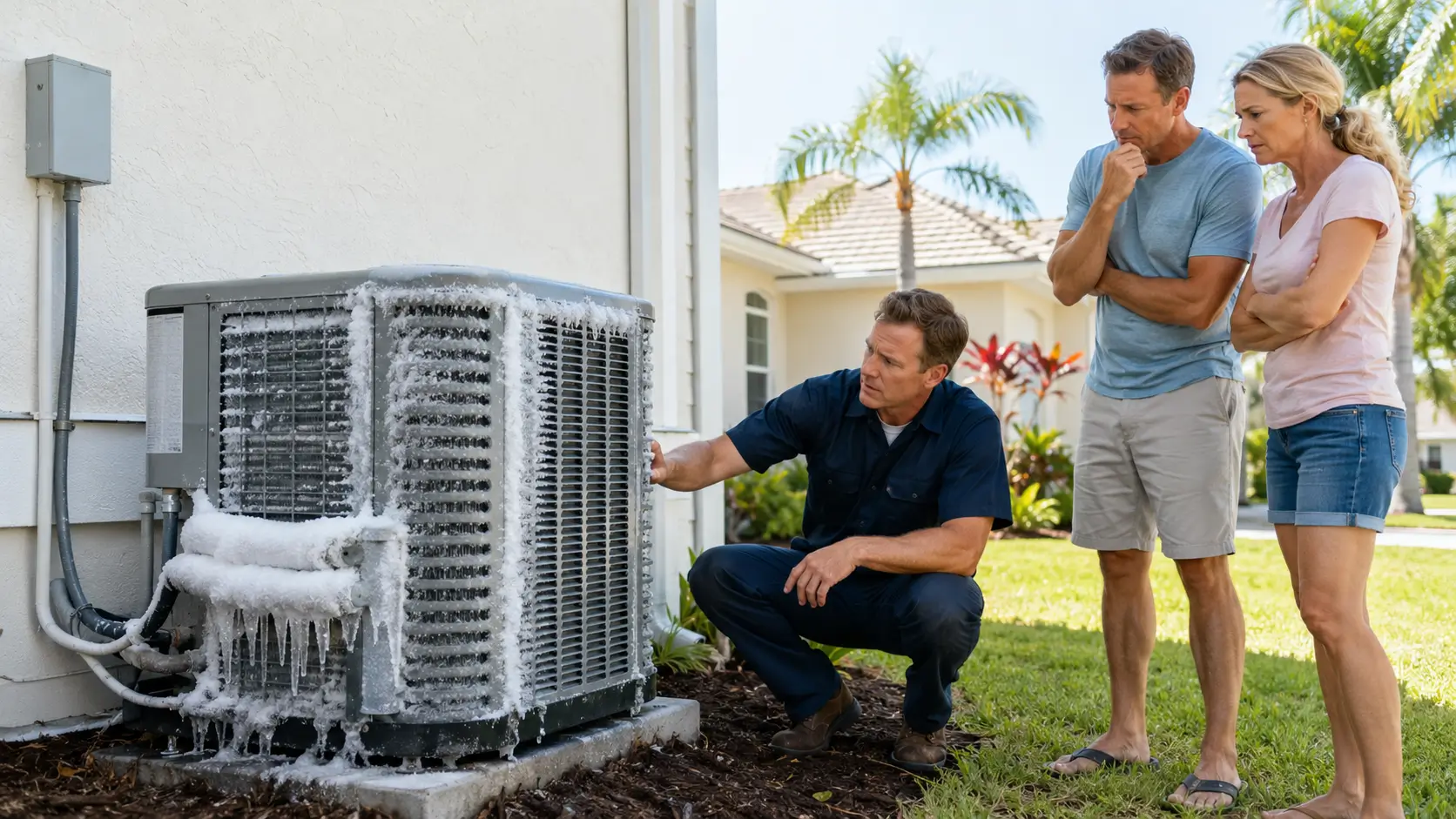
A compressor freezing over is one of the most common warning signs that your cooling system is not working properly. At first, a little ice on the unit may not seem serious. However, once ice starts forming around the compressor, evaporator coil, or refrigerant lines, your air conditioner can lose cooling power, use more energy, and face major mechanical damage.
Many homeowners notice this problem when the AC runs for hours but the room still feels warm. Others see water leaking near the indoor unit after the ice starts melting. In most cases, compressor freezing over happens because the system cannot move enough heat through the cooling cycle.
The good news is that many causes are preventable. Dirty filters, blocked vents, poor thermostat settings, and lack of maintenance can often be corrected before the compressor suffers damage. This guide explains the most common causes of compressor freezing over, how to recognize each issue, and what steps can help keep your cooling system safe.
Table of Contents
What Does Compressor Freezing Over Mean
Compressor freezing over means ice has formed on parts of your cooling system. The ice may appear on the outdoor compressor unit, refrigerant lines, evaporator coil, or nearby copper tubing. This usually happens when the temperature inside the system drops too low and moisture in the air turns into frost or ice.
Your air conditioner is designed to remove heat from indoor air and move it outside. When airflow is weak, refrigerant levels are wrong, or mechanical parts stop working correctly, the system cannot absorb heat as it should. As a result, internal temperatures fall below a safe level and ice starts to form.
A frozen compressor is not just a cooling problem. It can place stress on the compressor, fan motor, refrigerant lines, and electrical parts. If ignored, it may lead to poor performance, water leaks, higher energy bills, and expensive repair work.
Common Warning Signs of a Frozen Compressor
A frozen compressor usually gives several signs before the system stops working completely.
Weak Cooling
Your AC may run continuously, but the air coming from the vents may feel weak or only slightly cool.
Visible Ice
You may see ice on refrigerant lines, the evaporator coil, or parts of the outdoor unit.
Water Around the Unit
When the ice melts, water may drip around the indoor unit or near the air handler.
Higher Energy Bills
A frozen system has to work harder to cool your home, which can increase electricity usage.
Long Cooling Cycles
The air conditioner may stay on for a long time because it cannot reach the temperature set on the thermostat.
Strange Noises
A failing fan, stressed compressor, or blocked airflow may cause humming, buzzing, rattling, or grinding sounds.
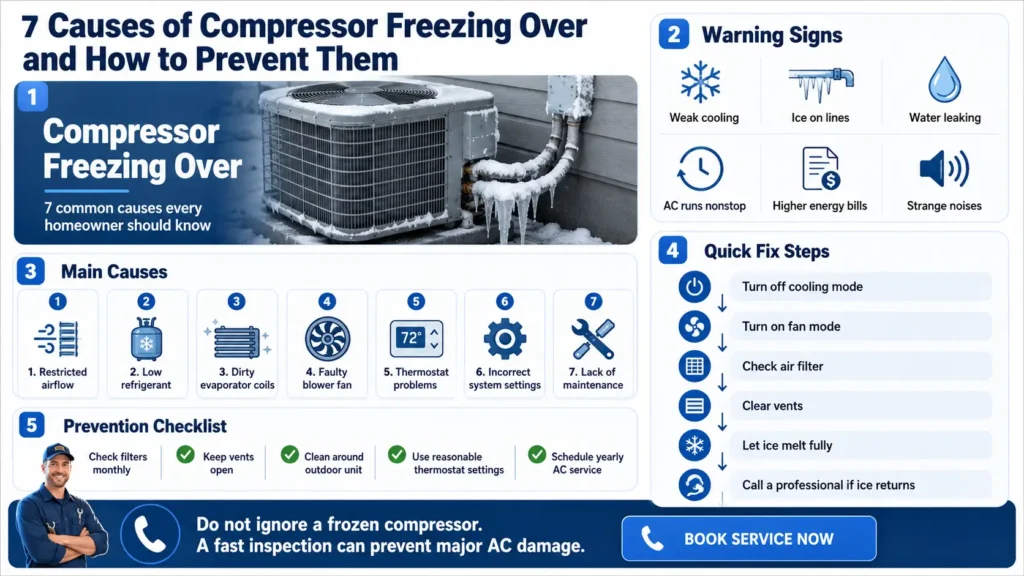
7 Causes of Compressor Freezing Over
1. Restricted Airflow
Restricted airflow is one of the leading causes of compressor freezing over. Your AC needs steady airflow to move warm indoor air across the evaporator coil. If airflow is blocked, the coil can become too cold and ice can begin forming.
Common airflow problems include dirty filters, closed vents, blocked return grilles, crushed ducts, or furniture placed too close to vents. When less air reaches the coil, the system cannot absorb enough heat. This causes temperatures inside the unit to drop below the safe operating range.
How to Fix It
Check the air filter first. If it looks dirty or clogged, replace it or clean it according to the manufacturer instructions. Make sure all supply vents and return vents are open and clear. Look around the home for furniture, curtains, rugs, or storage items blocking airflow.
If airflow still feels weak after basic checks, ductwork may be leaking, crushed, or blocked. In that case, an HVAC technician should inspect the system.
2. Low Refrigerant Levels
Low refrigerant is another common reason behind compressor freezing over. Refrigerant is the substance that absorbs heat from indoor air and releases it outside. When refrigerant levels are too low, pressure inside the system can drop. This can make the evaporator coil too cold and cause ice formation.
Low refrigerant usually means there is a leak somewhere in the system. Refrigerant does not get used up like fuel. If the system keeps losing refrigerant, simply adding more will not solve the main problem.
Signs of Low Refrigerant
- Ice on refrigerant lines
- Warm air from vents
- Hissing or bubbling sounds
- Long cooling cycles
- Higher energy bills
How to Fix It
Do not try to add refrigerant yourself. A trained HVAC professional should locate the leak, repair it, test the system, and recharge refrigerant to the correct level. Handling refrigerant requires proper tools, training, and safety procedures.
3. Dirty Evaporator Coils
The evaporator coil absorbs heat from the indoor air. When dust, pet hair, and dirt collect on the coil, heat transfer becomes weaker. The coil may then become too cold, which can lead to frost and ice.
Dirty coils often develop slowly over time. At first, the system may only lose a little efficiency. Later, the AC may struggle to cool, run longer, and eventually freeze.
Why Dirty Coils Cause Freezing
A dirty coil acts like a barrier between warm air and the refrigerant inside the coil. When heat cannot move into the refrigerant properly, the coil temperature drops. Moisture from the air then freezes on the coil surface.
How to Fix It
Turn off the system and let the ice melt completely. Do not scrape the ice with sharp tools because this can damage the coil. After the system is thawed, schedule professional coil cleaning if the coil is dirty or hard to access.
To prevent future buildup, replace filters on time and keep the area around the unit clean.
4. Faulty Blower Fan
The blower fan moves indoor air across the evaporator coil and through the duct system. If the blower fan slows down, stops working, or becomes damaged, airflow drops. Without enough airflow, the coil temperature can fall too low and cause compressor freezing over.
A blower fan problem can be caused by a worn motor, loose belt, bad capacitor, dirty fan blades, or electrical failure.
Signs of a Blower Fan Problem
- Weak airflow from vents
- Fan does not start
- Burning smell from the unit
- Rattling or grinding sound
- AC turns on but air does not move properly
How to Fix It
Start by checking the thermostat fan setting. If the fan still does not run, turn off the system and call an HVAC technician. Blower fan problems involve electrical and mechanical parts, so professional diagnosis is the safest option.
5. Thermostat Problems
A faulty thermostat can also cause compressor freezing over. If the thermostat reads the wrong temperature, sends incorrect signals, or keeps the system running too long, the AC may over cool the coil and create ice.
Sometimes the thermostat is not broken but placed in the wrong location. If it is near direct sunlight, appliances, windows, or air vents, it may read the room temperature incorrectly.
Common Thermostat Issues
- Incorrect temperature reading
- AC runs nonstop
- Thermostat placed near heat sources
- Old or failing thermostat
- Wrong fan or cooling settings
How to Fix It
Check the thermostat settings first. Set the temperature to a reasonable level and avoid setting it extremely low. Replace the batteries if needed. If the display is faulty or readings seem inaccurate, consider having the thermostat tested or replaced.
A smart thermostat can help maintain more stable temperatures, but it must be installed and programmed correctly.
6. Incorrect System Settings
Sometimes compressor freezing over happens because the system is being used in a way that places too much stress on it. Setting the thermostat too low can force the AC to run for long periods without enough rest. Running the system when outdoor temperatures are too low can also increase the risk of freezing.
Another common mistake is closing too many vents in unused rooms. This may seem like an energy saving idea, but it can reduce airflow and increase pressure in the duct system.
Settings That Can Cause Freezing
- Thermostat set extremely low
- Fan set incorrectly
- Too many closed vents
- AC running nonstop overnight
- Cooling mode used during cool outdoor weather
How to Fix It
Keep the thermostat at a practical cooling temperature. Make sure vents stay open in most rooms. Use the fan setting according to your comfort needs and system design. If your AC must run for long periods to cool the home, there may be a deeper issue with sizing, insulation, airflow, or refrigerant.
7. Lack of Regular Maintenance
Lack of maintenance is often the root cause behind compressor freezing over. Small problems such as dirty filters, weak airflow, loose electrical parts, and low refrigerant can develop into major issues when they are ignored.
Routine maintenance helps identify problems early. A technician can inspect coils, refrigerant pressure, fan motors, electrical parts, drain lines, and thermostat performance before the system freezes or breaks down.
Why Maintenance Matters
A neglected air conditioner works harder than necessary. The harder it works, the more likely it is to lose efficiency, freeze, or fail during hot weather. Regular care helps protect the compressor, which is one of the most expensive parts of the cooling system.
How to Fix It
Create a simple maintenance schedule. Check filters monthly during heavy use. Keep vents open and clear. Schedule professional AC service at least once a year, ideally before the main cooling season starts.
What to Do When Your Compressor Freezes
If you notice ice on the compressor or refrigerant lines, take action quickly.
Step 1: Turn Off Cooling Mode
Turn the thermostat from cool mode to off mode. This stops the compressor from running while the system is frozen.
Step 2: Turn On Fan Mode
If the fan works, turn it on to help move warm air across the coil and melt the ice faster.
Step 3: Check the Air Filter
Look at the air filter. If it is dirty, replace it or clean it before turning the system back on.
Step 4: Clear Vents and Returns
Make sure vents and return grilles are open and not blocked by furniture, curtains, or rugs.
Step 5: Let the Ice Melt Fully
Wait until all visible ice has melted. This may take several hours depending on the amount of ice.
Step 6: Call a Professional if Ice Returns
If the system freezes again after basic airflow checks, call an HVAC technician. The issue may involve refrigerant, coils, blower parts, or electrical controls.
How to Prevent Compressor Freezing Over
Preventing compressor freezing over is easier and cheaper than repairing a damaged system.
Replace or Clean Filters Regularly
A clean filter helps maintain airflow and protects the evaporator coil from dust buildup. Check the filter monthly during heavy use and replace it when dirty.
Keep Vents Open and Clear
Do not block vents with furniture or storage items. Keep return grilles open so the system can pull in enough air.
Schedule Annual AC Maintenance
Professional maintenance helps catch refrigerant leaks, dirty coils, fan issues, and electrical problems before they cause freezing.
Watch for Early Warning Signs
Do not ignore weak airflow, warm air, unusual sounds, water leaks, or rising utility bills. These signs often appear before the system freezes.
Use Reasonable Thermostat Settings
Avoid setting the thermostat too low. A lower number does not cool the home faster. It only makes the system run longer.
Keep the Outdoor Unit Clear
Remove leaves, grass, dirt, and debris around the outdoor unit. Good outdoor airflow helps the system release heat properly.
When to Call an HVAC Professional
Some compressor freezing problems can be improved with simple homeowner steps, but many require professional help.
Call an HVAC professional if:
- Ice returns after the system thaws
- Airflow stays weak after changing the filter
- You hear hissing or bubbling sounds
- The AC blows warm air
- The blower fan does not run
- The thermostat seems inaccurate
- Water keeps leaking around the unit
- Your energy bill rises without a clear reason
A frozen compressor can become expensive if ignored. A technician can find the root cause and help prevent repeat freezing.
Quick Diagnosis Guide
If You See Ice on Refrigerant Lines
Possible cause: Low refrigerant, dirty coil, or poor airflow
Best next step: Turn off cooling mode and call a professional if ice returns
If Airflow Feels Weak
Possible cause: Dirty filter, blocked vents, blower issue, or duct problem
Best next step: Replace the filter and check vents
If AC Runs Nonstop
Possible cause: Thermostat issue, low refrigerant, poor sizing, or poor insulation
Best next step: Check thermostat settings and schedule inspection
If Water Leaks Near Indoor Unit
Possible cause: Melting ice or clogged drain line
Best next step: Turn off cooling mode and check for ice
If You Hear Strange Noises
Possible cause: Blower fan issue, motor problem, or loose part
Best next step: Stop using the system and request service
FAQs
What is the main cause of compressor freezing over
The most common cause is restricted airflow. A dirty filter, blocked vent, dirty coil, or blower fan issue can reduce airflow and make the evaporator coil too cold.
Can I run my AC while the compressor is frozen
No. Running the AC while it is frozen can damage the compressor and other parts. Turn off cooling mode and let the ice melt fully.
How long does it take for a frozen AC to thaw
It can take a few hours for the ice to melt. Heavy ice buildup may take longer. Keep cooling mode off until the system is fully thawed.
Is low refrigerant always the reason for freezing
No. Low refrigerant is a common cause, but airflow problems, dirty coils, faulty fans, thermostat issues, and poor maintenance can also cause freezing.
Can a dirty filter cause compressor freezing over
Yes. A dirty filter blocks airflow. When airflow is weak, the evaporator coil can become too cold and ice can form.
How often should I replace my AC filter
Check the filter every month during heavy use. Replace it when it looks dirty. Many homes need a new filter every one to three months depending on usage, dust, pets, and filter type.
Is compressor freezing over expensive to repair
The cost depends on the cause. A dirty filter may be inexpensive to fix. Refrigerant leaks, blower motor problems, or compressor damage can cost much more.
How can I stop my compressor from freezing again
Keep filters clean, vents open, coils maintained, thermostat settings reasonable, and schedule yearly professional service.
Conclusion
Compressor freezing over is a clear sign that your cooling system needs attention. While the ice may look harmless at first, it can point to airflow restriction, low refrigerant, dirty coils, blower fan failure, thermostat errors, poor settings, or lack of maintenance.
The safest first step is to turn off cooling mode and let the ice melt. After that, check the filter, vents, and thermostat settings. If the system freezes again, professional service is the best way to find the real cause and protect your compressor from lasting damage.
A clean, well maintained AC system cools better, uses less energy, and lasts longer. By taking simple preventive steps, you can reduce the risk of compressor freezing over and avoid costly emergency repairs.
 Heading Sub Title
Leave a Reply