
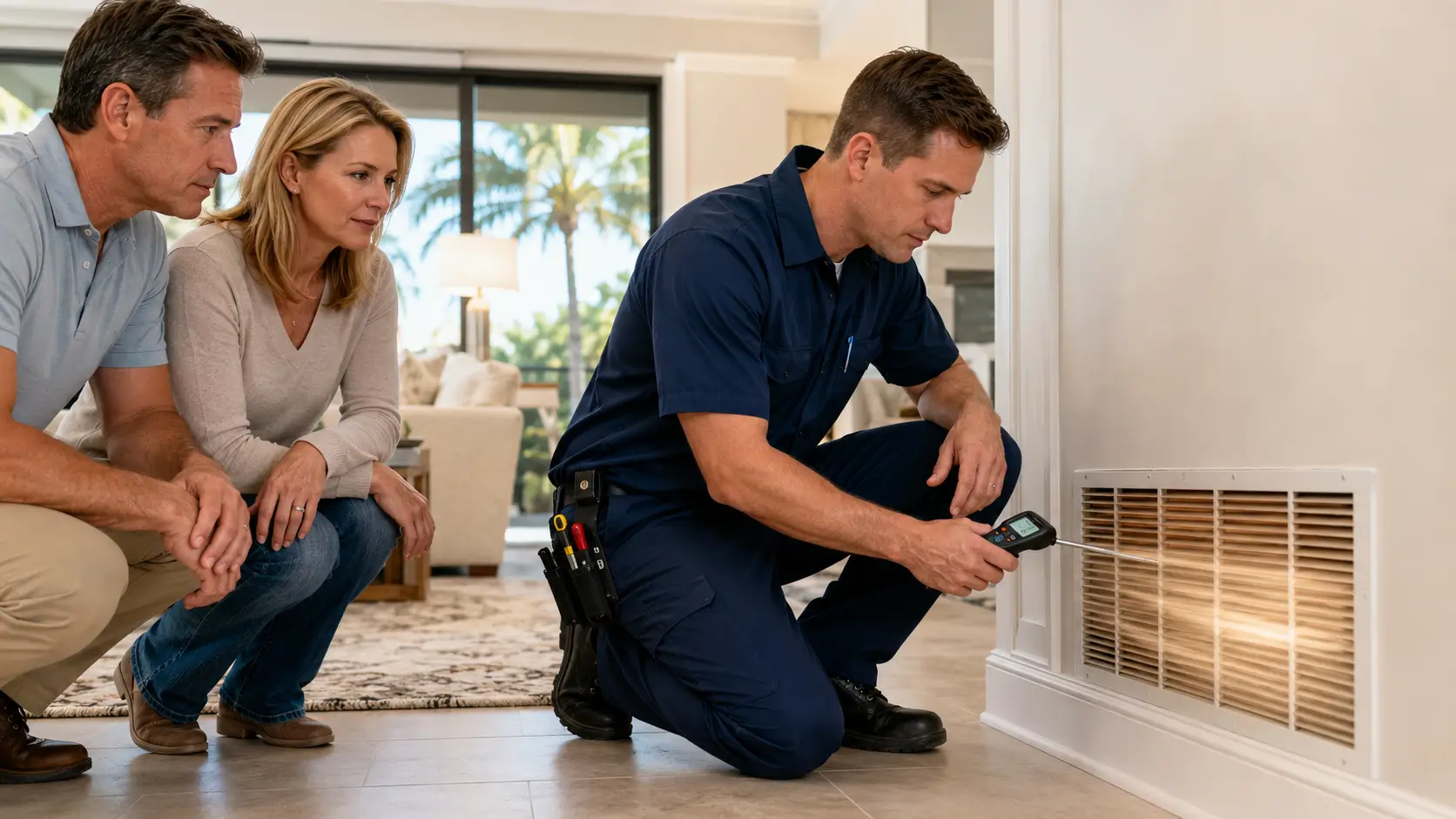
What temperature should air come out of vents when heat is on? The answer depends on your heating system, indoor temperature, outdoor weather, airflow, and duct condition. Gas furnaces normally produce hotter air than heat pumps. Electric furnaces may also produce strong heat, but their output varies by design. Because every system works differently, one temperature cannot describe every home.
The temperature coming from a vent can still reveal useful information. Air that feels unusually cool may point to airflow loss, thermostat trouble, duct leakage, or equipment failure. Air that feels extremely hot can suggest restricted airflow or an overheating furnace. All In One AC recommends checking both supply air and return air temperatures. The difference between these readings gives a better picture of system performance.
This guide explains eight key facts about normal heating vent temperatures, proper measurement, warning signs, and professional diagnosis.
Table of Contents
Quick Answer
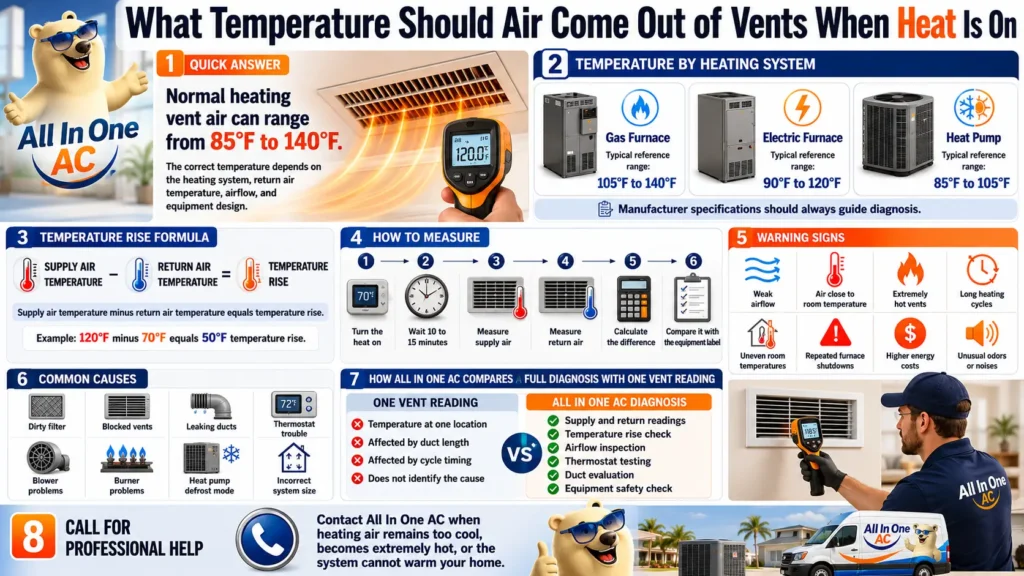
Air from heating vents commonly falls between 85°F and 140°F. However, the expected temperature depends on the heating system.
Common reference ranges include:
- Gas furnace air may range from 105°F to 140°F
- Electric furnace air may range from 90°F to 120°F
- Heat pump air may range from 85°F to 105°F
These are general reference ranges. Your equipment label and manufacturer instructions provide the most accurate temperature rise range for your system.
A vent reading should also be compared with the return air temperature. This comparison helps show how much heat the system adds.
Why Vent Air Temperature Matters
Vent temperature can help you understand whether your heating system is working normally.
A correct temperature can support:
- Better indoor comfort
- More even room heating
- Lower energy waste
- Safer furnace operation
- Faster problem detection
- Longer equipment life
A single unusual reading does not always mean the system is failing. Vent location, duct length, outdoor weather, and system cycle timing can affect the result.
However, repeated low or high readings should not be ignored.
8 Key Facts About Heating Vent Temperature
1. Normal Vent Temperature Depends on the Heating System
Different heating systems create heat in different ways. This affects the temperature of air leaving the vents.
A gas furnace burns fuel inside a combustion chamber. Heat moves through a heat exchanger before the blower sends warm air through the ducts. This process usually produces the hottest vent air.
An electric furnace uses electric heating elements. Air moves across these heated elements before entering the supply ducts.
A heat pump does not create heat through combustion. It moves heat from the outdoor air into the home. Because of this process, heat pump air often feels warm rather than hot.
The correct vent temperature should always be judged according to the system type.
Gas Furnace Vent Temperature
Gas furnace air often ranges from 105°F to 140°F. The exact reading depends on return air temperature, blower speed, furnace stage, and equipment design.
Electric Furnace Vent Temperature
Electric furnace air commonly ranges from 90°F to 120°F. Some systems may produce higher temperatures when additional heating elements operate.
Heat Pump Vent Temperature
Heat pump air often ranges from 85°F to 105°F. It may feel cooler against your skin while still warming the room effectively.
2. Temperature Rise Is More Useful Than One Vent Reading
The most useful measurement is often temperature rise.
Temperature rise is the difference between return air temperature and supply air temperature.
For example, imagine that return air enters the system at 70°F. Supply air leaves the system at 120°F. The temperature rise is 50°F.
Many furnaces operate with a temperature rise between 40°F and 70°F. However, the correct range should appear on the furnace information label.
A technician from All In One AC can compare the measured rise with the equipment requirement. This helps identify airflow, burner, blower, and duct problems.
Why Temperature Rise Matters
A vent reading of 110°F may be normal in one home but unusual in another.
The reading depends on the temperature of the air entering the system. This is why both return and supply readings matter.
A temperature rise that is too high can suggest weak airflow. A rise that is too low can suggest excessive airflow, duct leakage, or weak heating output.
3. Gas Furnaces Usually Produce the Hottest Vent Air
Gas furnaces commonly deliver hotter air than heat pumps. This is why furnace heat often feels stronger when you stand near a vent.
The furnace blower does not normally start as soon as the burner ignites. The system waits until the heat exchanger reaches a suitable temperature. The blower then moves heated air through the home.
The vent temperature may increase during the first few minutes of operation. It should become more stable as the heating cycle continues.
A gas furnace may produce unusually low vent temperatures when it has:
- Dirty burners
- A damaged heat exchanger
- Incorrect gas pressure
- Excessive blower speed
- Leaking ducts
- Thermostat problems
- An undersized heating system
Extremely hot vent air can also indicate trouble. Restricted airflow may cause too much heat to build inside the furnace.
4. Heat Pump Air Can Feel Cooler and Still Be Normal
Many homeowners become concerned because heat pump air does not feel as hot as furnace air.
A heat pump normally produces a lower air temperature over a longer heating cycle. The system may run steadily to maintain comfortable indoor conditions.
Air from a heat pump can feel cool against your skin because body temperature is higher than the vent air. However, that air may still be much warmer than the room.
Heat pump output also changes with outdoor temperature. The system may produce cooler air as outdoor conditions become colder.
Auxiliary heat may activate when the heat pump needs support. This additional heat can raise the supply air temperature.
Heat Pump Defrost Mode
A heat pump may temporarily enter defrost mode during cold weather. The system uses this cycle to remove frost from the outdoor coil.
Vent air may feel cooler during this short period. Normal heating should return after defrost mode ends.
Call All In One AC when cool air continues for a long period or the home cannot reach the thermostat setting.
5. Outdoor Temperature and Duct Condition Affect the Reading
Vent air temperature does not depend only on the heating equipment.
Outdoor weather can change heating demand. A heat pump may work harder during very cold conditions. A furnace may run longer when the home loses heat quickly.
Duct condition also affects the reading.
Warm air loses heat while moving through long ducts. The loss may become greater when ducts pass through an attic, crawl space, garage, or other unconditioned area.
Common duct problems include:
- Loose connections
- Air leaks
- Damaged insulation
- Crushed duct sections
- Poor duct sizing
- Blocked supply ducts
- Restricted return ducts
A vent near the heating unit may produce a higher reading than a distant vent. This difference does not always indicate equipment failure.
Large temperature differences between rooms may suggest duct leakage, poor insulation, or airflow imbalance.
6. Proper Measurement Requires Supply and Return Readings
You can perform a basic temperature check with a reliable digital thermometer.
Do not measure the temperature immediately after the heating system starts. The equipment and ducts need time to warm.
How to Measure Supply Air Temperature
- Set the thermostat several degrees above the room temperature
- Allow the heating system to run for 10 to 15 minutes
- Choose a supply vent near the heating unit
- Place the thermometer inside the moving air
- Avoid touching the metal vent surface
- Wait until the reading becomes stable
- Record the temperature
How to Measure Return Air Temperature
- Find the main return air grille
- Place the thermometer in the moving return air
- Wait for the reading to become stable
- Record the temperature
- Subtract the return reading from the supply reading
The result is the temperature rise.
Measurement Example
Return air temperature: 70°F
Supply air temperature: 120°F
Temperature rise: 50°F
Compare your result with the temperature rise range printed on the equipment label.
7. Very Low or Very High Readings Can Signal Problems
A low reading may mean the system is not adding enough heat. It may also mean heated air is being lost before reaching the vent.
Possible causes include:
- Dirty air filter
- Incorrect thermostat setting
- Leaking ductwork
- Weak blower performance
- Heat pump defrost mode
- Low refrigerant in a heat pump
- Faulty heating elements
- Burner problems
- Poor system sizing
- Open windows or major air leaks
A very high reading may suggest that the furnace is producing heat but cannot move enough air.
Possible causes include:
- Clogged air filter
- Closed supply vents
- Blocked return grille
- Dirty blower wheel
- Low blower speed
- Damaged blower motor
- Restricted ductwork
- Faulty furnace limit control
Restricted airflow can cause overheating. The furnace may shut down to protect itself and restart after cooling.
This repeated stopping and starting should be inspected by a heating professional.
8. Maintenance Helps Keep Vent Temperature Stable
Regular maintenance supports proper airflow, safe operation, and reliable heating.
A dirty filter makes it harder for air to move through the system. Reduced airflow can raise furnace temperature and lower the amount of warm air reaching each room.
All In One AC recommends checking the filter regularly during the heating season. Replace or clean it according to the equipment and filter instructions.
Professional heating maintenance may include:
- Checking thermostat operation
- Inspecting the air filter
- Measuring temperature rise
- Testing blower performance
- Inspecting electrical connections
- Checking burner operation
- Examining the heat exchanger
- Testing furnace safety controls
- Inspecting accessible ductwork
- Confirming proper system cycling
Maintenance can identify small problems before they become expensive repairs.
How All In One AC Compares a Full Heating Diagnosis With a Single Vent Reading
A vent temperature reading provides useful information, but it does not explain the complete condition of a heating system.
A Single Vent Reading
A single vent reading shows the temperature at one location and one moment.
That reading can change because of:
- Distance from the heating unit
- Duct heat loss
- Vent airflow
- Outdoor temperature
- Heating cycle timing
- Thermometer placement
- Room temperature
A homeowner may see a low reading and assume the furnace is failing. However, the actual cause may be a damaged duct or blocked filter.
The All In One AC Diagnostic Approach
All In One AC looks beyond one vent reading when evaluating heating performance.
A complete diagnosis can include:
- Supply air temperature
- Return air temperature
- Equipment temperature rise
- Blower airflow
- Filter condition
- Thermostat accuracy
- Duct leakage
- Heating cycle length
- Furnace safety controls
- Heat pump operation
This wider comparison helps separate normal system behavior from an actual repair need.
Why the Comparison Matters
Replacing a thermostat will not solve a damaged blower motor. Cleaning a vent will not repair leaking ductwork. Adding heat will not solve a restricted return grille.
Accurate diagnosis reduces unnecessary repairs and helps address the real cause of poor heating.
Signs That Vent Air Is Too Cool
Air may be too cool when the heating system runs continuously but cannot warm the home.
Watch for these warning signs:
- Rooms remain below the thermostat setting
- Air feels close to room temperature
- The system runs for unusually long periods
- Some rooms receive little airflow
- Energy costs increase without explanation
- The heat pump never leaves defrost mode
- The furnace starts but the burners shut down quickly
- Vent temperature keeps falling during operation
Check the thermostat and filter first. Make sure supply vents and return grilles are open.
Professional service is needed when the problem continues.
Signs That Vent Air Is Too Hot
Very hot vent air is not always better. It can mean that heat is building inside the furnace because airflow is restricted.
Warning signs include:
- A burning odor that continues
- Furnace shutdown during a heating cycle
- Frequent starting and stopping
- Weak airflow with very hot air
- Unusual furnace noises
- A damaged or discolored vent cover
- A furnace cabinet that feels unusually hot
- Repeated limit control activation
Turn off the system and arrange an inspection when you notice smoke, a strong electrical smell, or repeated overheating.
Leave the home immediately when a carbon monoxide alarm sounds. Contact emergency services and the gas utility from a safe location.
Common Reasons Heating Air Feels Cool
The Thermostat Fan Is Set to On
When the fan setting is on, the blower may continue operating after the heating cycle ends. It can then move room temperature air through the vents.
Use the auto setting when you want the blower to operate only during heating cycles.
The Filter Is Dirty
A clogged filter reduces airflow. This can lower comfort and place stress on the heating equipment.
The Heat Pump Is in Defrost Mode
Temporary cool air can be normal during defrost mode. Heating should return after the cycle finishes.
The Ducts Are Leaking
Duct leaks can release heated air into an attic, wall cavity, garage, or crawl space.
The Heating System Is Too Small
An undersized system may run continuously during cold weather without reaching the desired temperature.
The Heating Equipment Needs Repair
Faulty burners, electric elements, blower parts, controls, or heat pump components can reduce heating output.
How to Improve Heating Performance
Check the Air Filter
Inspect the filter every month during regular use. Replace it when it appears dirty.
Keep Vents Open
Closing several vents can restrict airflow and increase pressure inside the duct system.
Clear Return Grilles
Move furniture, curtains, boxes, and rugs away from return air grilles.
Use Practical Thermostat Settings
Setting the thermostat much higher does not make the system heat faster. It usually makes the equipment run longer.
Seal Air Leaks
Weather sealing around windows and doors can reduce heat loss.
Inspect Ductwork
Damaged or poorly insulated ducts can lower the temperature of air before it reaches the room.
Schedule Yearly Maintenance
A yearly inspection helps maintain airflow, heating output, efficiency, and safety.
When to Contact All In One AC
Contact All In One AC when:
- The vent air remains close to room temperature
- The furnace repeatedly shuts down
- The heat pump blows cool air for long periods
- The temperature rise is outside the equipment range
- Airflow is weak throughout the home
- Some rooms remain much colder than others
- Energy costs rise suddenly
- The system makes unusual noises
- You notice a persistent burning smell
- The heating system cannot reach the thermostat setting
Heating equipment contains electrical parts, moving components, refrigerant, fuel connections, and safety controls. These parts should be inspected by a trained professional.
FAQs
What temperature should air come out of vents when heat is on
Heating vent air commonly ranges from 85°F to 140°F. The correct temperature depends on whether you have a gas furnace, electric furnace, or heat pump.
Is 90°F air normal from heating vents
Yes, 90°F may be normal for a heat pump. It may also be normal for some electric systems. It would be unusually low for many gas furnaces.
Is 120°F air normal from heating vents
Yes, 120°F can be normal for a gas or electric furnace. Compare the supply and return readings with the equipment temperature rise range.
Why does heat pump air feel cold
Heat pump air is usually cooler than gas furnace air. Air around 85°F to 100°F can feel cool against warmer skin while still heating the room.
How long should I wait before measuring vent temperature
Allow the heating system to run for about 10 to 15 minutes. This gives the equipment and ducts time to reach a stable temperature.
Which vent should I test
Start with a supply vent located near the heating equipment. You should also measure the main return air temperature.
Can a dirty filter change vent temperature
Yes. A dirty filter restricts airflow. It may cause a furnace to overheat while reducing warm airflow throughout the home.
Why is one room colder than another
Possible causes include duct leakage, poor insulation, blocked vents, airflow imbalance, or long duct runs.
Should every vent have the same temperature
Small differences are normal. Large differences may indicate duct heat loss, leakage, insulation problems, or restricted airflow.
When is hot vent air dangerous
Seek professional help when very hot air appears with weak airflow, repeated shutdowns, smoke, electrical odors, or unusual furnace temperatures.
Conclusion
What temperature should air come out of vents when heat is on? Most heating systems produce air between 85°F and 140°F, but system type matters. Gas furnaces usually deliver the hottest air. Heat pumps normally deliver gentler heat over longer cycles. Electric furnace temperatures vary according to the heating elements and airflow. The most useful check compares supply air with return air. This calculation shows the temperature rise produced by the heating equipment.
A reading outside the manufacturer range may indicate restricted airflow, duct leakage, blower trouble, thermostat errors, or equipment failure. All In One AC can evaluate the complete heating system when vent temperatures seem unusual. A full inspection provides more useful information than one vent reading alone.
 Heading Sub Title
Leave a Reply