
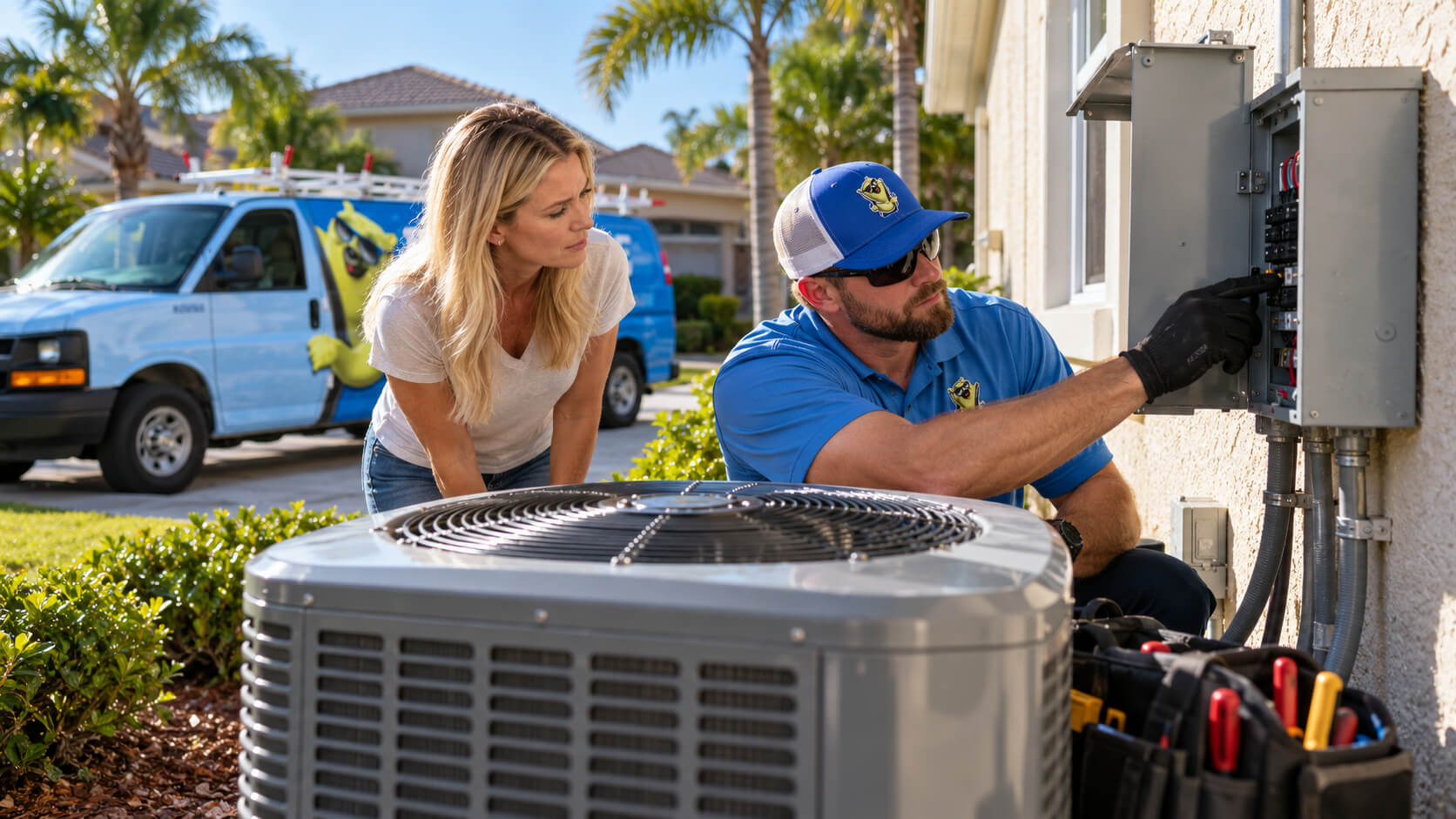
If your AC breaker keeps tripping, treat the problem as an electrical warning.
Circuit AC breakers protect equipment and wiring when electrical conditions become unsafe.
Repeatedly resetting the AC breaker without determining why it is tripping can increase the risk of equipment damage.
Table of Contents
Should You Keep Resetting the AC Breaker?
No.
If the AC breaker trips again after being reset, leave the AC off and arrange professional inspection.
Never:
- Hold the AC breaker in position
- Replace it with a larger AC breaker yourself
- Bypass electrical protection
- Continue operating equipment that smells burned
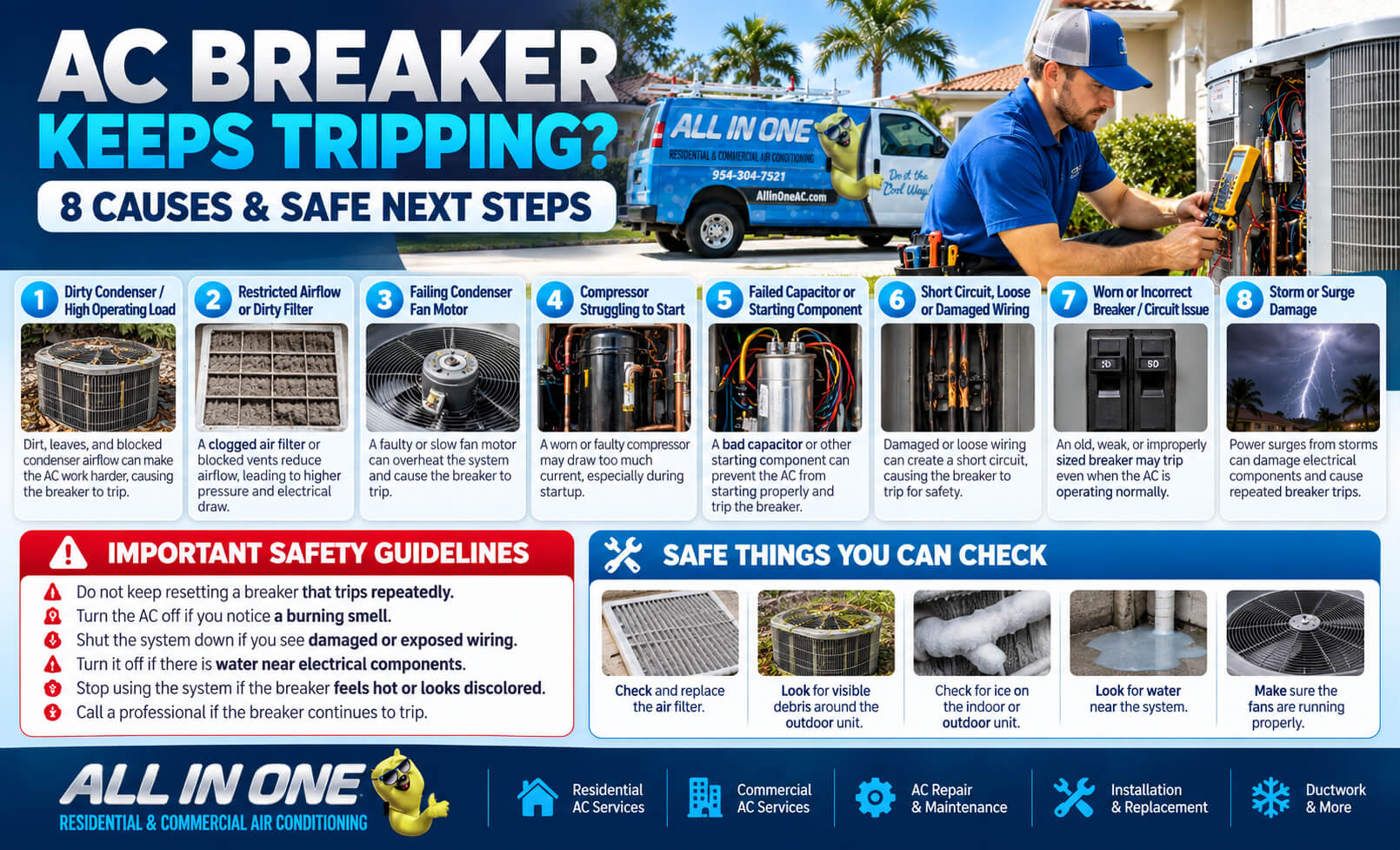
1. The Outdoor Condenser Is Extremely Dirty
The condenser must release heat outdoors.
Heavy dirt, leaves, and debris can reduce airflow and increase system strain.
This may expose already weak electrical or mechanical components.
2. Airflow Is Restricted
A severely clogged filter can affect system operation.
Restricted airflow may cause coil freezing and abnormal cooling conditions.
Check the filter before restarting the equipment.
3. The Condenser Fan Motor Is Failing
A failing fan motor can draw excessive electrical current.
Possible signs include:
- Fan not starting
- Slow fan movement
- Buzzing
- Intermittent operation
- Outdoor unit overheating
4. The Compressor Is Struggling
The compressor is one of the largest electrical loads in the AC system.
A damaged or failing compressor can draw excessive current.
You may hear:
- Humming
- Clicking
- Hard starting
- Abnormal compressor noise
5. A Capacitor Is Failing
HVAC systems commonly use capacitors to help motors start and operate.
When a capacitor weakens, the motor or compressor may struggle to start.
Capacitors can hold dangerous electrical energy even after power is disconnected, so homeowners should not handle them.
6. There Is Damaged Wiring or a Short Circuit
Electrical problems can develop because of:
- Heat
- Vibration
- Moisture
- Corrosion
- Loose terminals
- Damaged insulation
Short circuits can cause immediate AC breaker trips.
7. The AC Breaker Keeps Tripping or Circuit Has a Problem
Sometimes the issue is in the electrical circuit rather than the AC equipment itself.
The AC breaker may be damaged or incorrectly configured.
Never solve the problem by simply installing a larger breaker.
8. A Florida Storm or Power Surge Caused Damage
Lightning, utility disturbances, and power surges can damage HVAC electrical components.
If breaker problems started after a storm, have the system inspected.
Safe Things Homeowners Can Check
You can safely look at:
- Filter condition
- Visible debris around the condenser
- Whether fans are operating
- Visible ice
- Water around equipment
- Whether the failure began after a storm
Do not open energized electrical compartments.
Turn the AC Off Immediately If
- The breaker trips repeatedly
- You smell burning
- Wiring looks damaged
- The condenser only hums
- Water is near electrical equipment
- The breaker feels unusually hot
- Equipment makes severe mechanical noise
How an HVAC Technician Diagnoses the Problem
Testing may include:
- Voltage
- Current draw
- Compressor operation
- Fan motors
- Capacitors
- Wiring
- Breaker condition
- Coil condition
- Airflow
- Refrigeration performance
For HVAC troubleshooting, see All In One AC residential services.
FAQs
Why does my AC breaker trip after several minutes?
A motor, compressor, electrical connection, overheating condition, or excessive electrical load may appear after the equipment has been operating.
Why does the breaker trip immediately?
Immediate trips may indicate a short circuit or serious electrical fault.
Can a dirty AC trip the breaker?
Poor airflow or condenser blockage can increase operating strain, although repeated trips require professional electrical diagnosis.
Can I install a bigger breaker?
No. Breaker sizing must match the equipment and electrical circuit.
Conclusion
If your AC breaker keeps tripping, resetting the breaker repeatedly is not a repair.
The problem may involve a fan motor, compressor, capacitor, wiring, electrical circuit, or operating condition.
Perform only safe checks. If the breaker trips again, leave the equipment off and have the cause professionally diagnosed.
 Heading Sub Title
Leave a Reply