

A mini fridge is convenient until you open the door and discover your drinks are warm, your food is no longer cold, or the appliance has stopped running altogether.
If your mini fridge not working problem appeared suddenly, you may be wondering whether something simple has gone wrong or whether the refrigerator needs professional attention.
Fortunately, not every cooling problem means the appliance is beyond repair. Incorrect temperature settings, poor ventilation, dirty components, and damaged door seals are common issues that may be relatively straightforward to identify.
Other problems, including compressor failures and refrigerant leaks, require professional diagnosis.
This guide explains seven common causes of mini refrigerator problems, practical troubleshooting steps, warning signs that deserve attention, and ways to keep your appliance operating efficiently.
Table of Contents
Why Is My Mini Fridge Not Working?
A mini refrigerator uses a cooling system to remove heat from its interior and release that heat into the surrounding room.
Most traditional mini fridges use a compressor, refrigerant, condenser, and evaporator to accomplish this.
However, some very small desktop coolers use thermoelectric technology instead of a compressor. These models have different cooling limitations and troubleshooting requirements.
When a mini fridge not working issue occurs, the problem generally falls into one of three categories:
- Electrical problems: The appliance is not receiving power or cannot start properly.
- Cooling performance problems: The refrigerator runs but cannot remove enough heat.
- Temperature control problems: The thermostat, door seal, ventilation, or operating environment prevents consistent cooling.
Identifying the symptom is the best place to start.
For example, a completely silent refrigerator requires different checks than one that hums continuously but never gets cold.
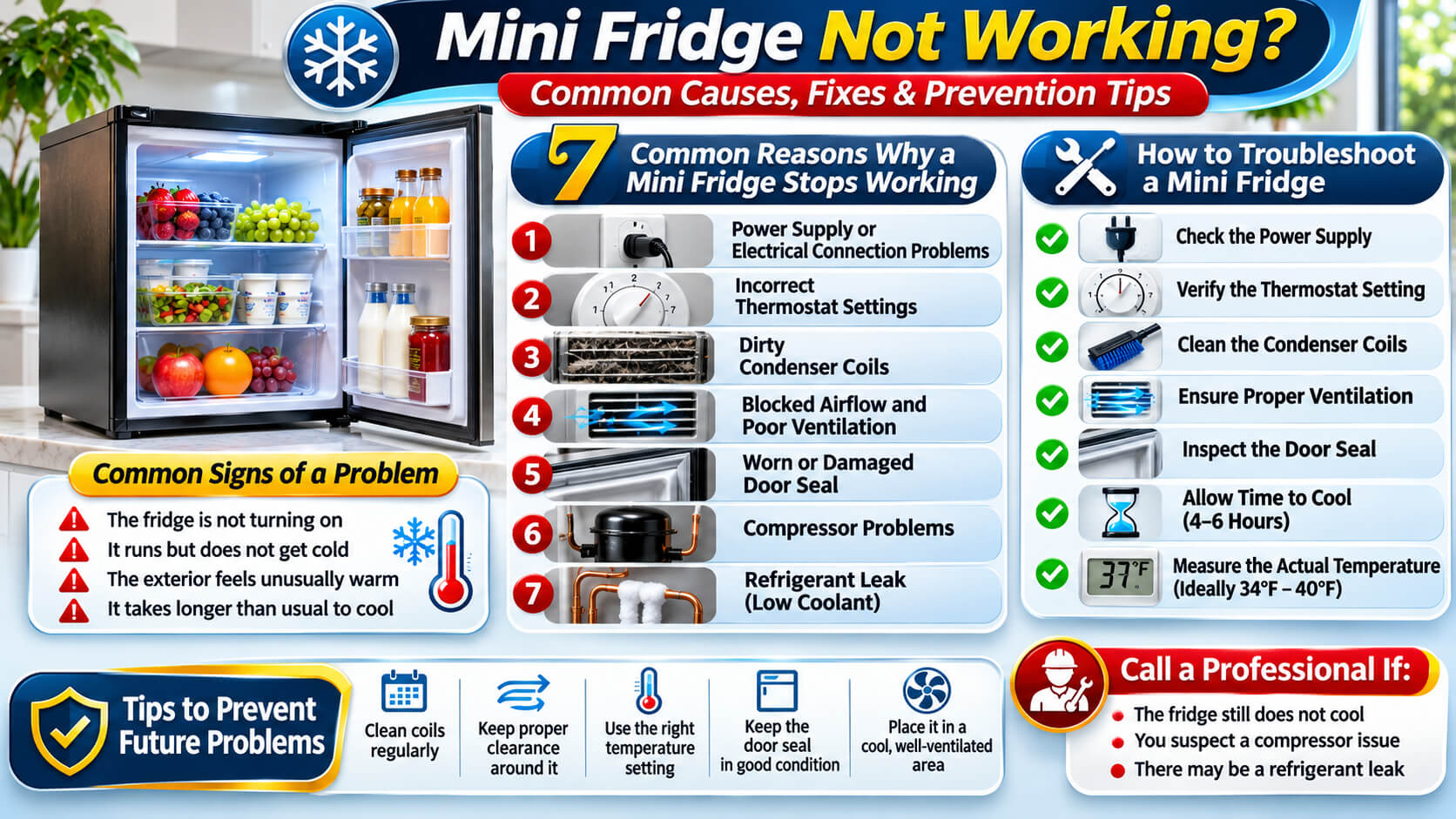
7 Common Reasons Why a Mini Fridge Stops Working
Understanding the causes can help you decide which checks are safe to perform and which problems require professional attention.
1. Power Supply or Electrical Connection Problems
One of the simplest explanations for a mini fridge not working is an interruption in its power supply.
The refrigerator may have been accidentally unplugged, the outlet may have lost power, or a circuit protection device may have tripped.
Common symptoms include:
- No interior light, if the model has one
- No normal operating sounds
- No cooling activity
- A completely unresponsive control panel
Start by checking that the power cord is securely connected.
You can also test the outlet using another small appliance. If a GFCI outlet has tripped, follow its normal reset instructions.
Avoid using damaged power cords, loose outlets, or overloaded extension cords.
If the outlet repeatedly loses power or a breaker keeps tripping, contact a qualified electrician or appliance technician rather than repeatedly resetting the circuit.
2. Incorrect Thermostat Settings
Sometimes a mini refrigerator not getting cold is simply operating at the wrong temperature setting.
Compact refrigerators commonly have a numbered thermostat dial. Depending on the model, turning the dial toward a higher number may increase cooling.
However, temperature controls vary between manufacturers.
A dial accidentally turned to OFF or a very warm setting can prevent proper cooling.
Check the owner’s manual to understand the settings on your particular refrigerator.
Adjust the control gradually and allow enough time for the temperature to stabilize.
Setting the thermostat to its coldest position does not necessarily make the refrigerator cool faster. It may simply cause longer operation and unnecessary energy use.
3. Dirty Condenser Coils
Condenser coils release heat that the refrigerator removes from its interior.
On some compact refrigerators, these coils are visible near the back or underneath the appliance. Other models use condenser tubing built into the cabinet walls.
When accessible coils become covered with dust and debris, they can have difficulty releasing heat efficiently.
Possible warning signs include:
- The mini fridge running but not cooling properly
- Longer cooling cycles
- Unusually warm exterior surfaces
- Higher electricity consumption
To inspect accessible exterior ventilation areas, unplug the appliance first.
Use a soft brush or vacuum attachment to remove loose dust from areas the manufacturer identifies as safe to clean.
Do not remove electrical covers, touch wiring, or attempt to access concealed refrigeration components.
If your model has no exposed coils, follow its manufacturer-specific cleaning instructions.
4. Blocked Airflow and Poor Ventilation
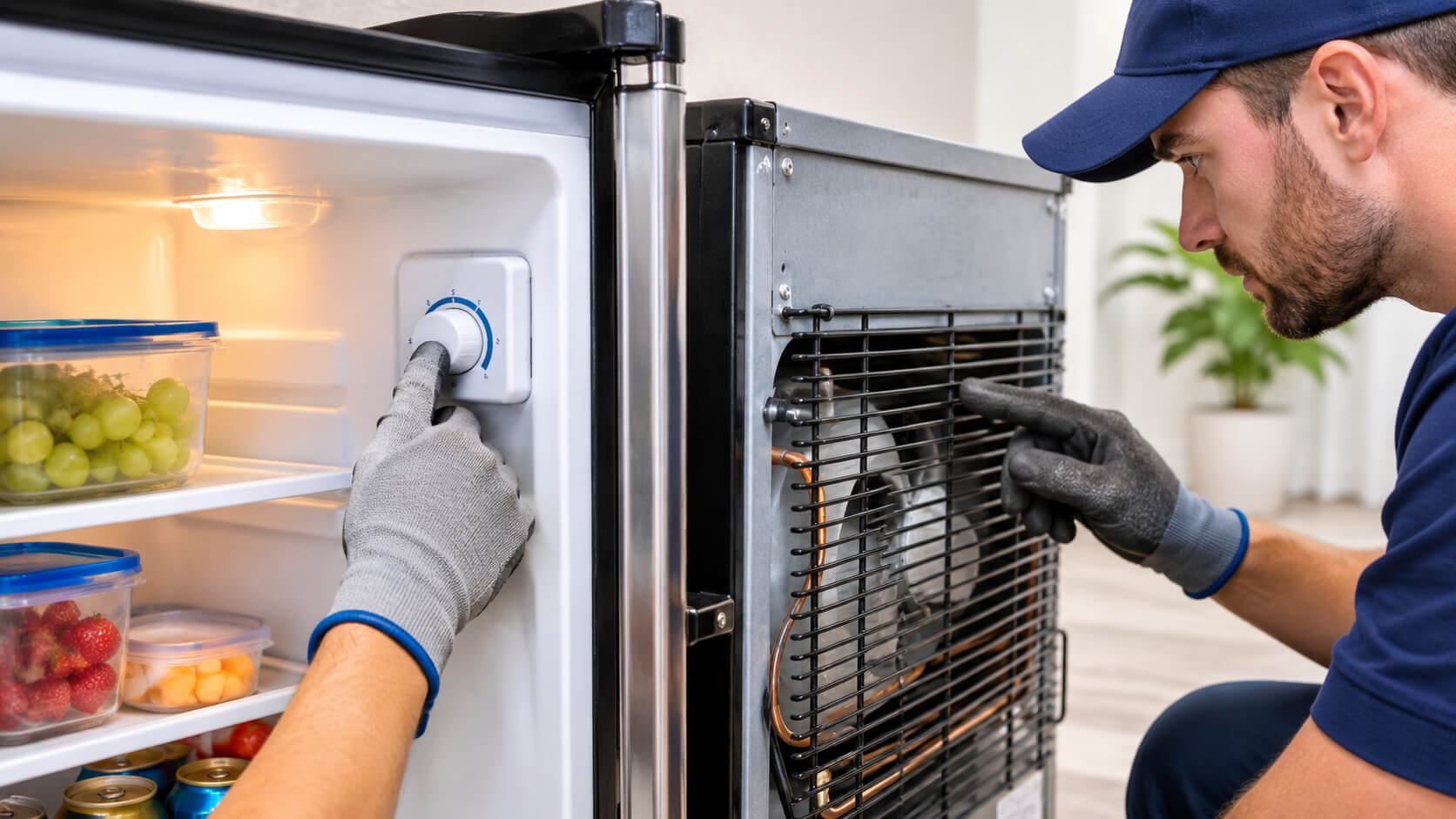
Mini fridges need sufficient airflow to release heat.
Placing one inside a tightly enclosed cabinet, directly beside a heater, or against a wall without the required clearance can reduce its cooling performance.
This is especially important in hot rooms, small offices, garages, and other poorly ventilated spaces.
A mini fridge stopped working properly after being moved may simply be operating in an unsuitable location.
Check that:
- Exterior ventilation openings are unobstructed.
- The appliance has the clearance specified in its manual.
- Direct sunlight is not heating the cabinet.
- Stored items are not blocking internal airflow.
- The refrigerator is positioned as recommended by the manufacturer.
Avoid packing the interior so tightly that cold air cannot circulate.
If the appliance is in a hot garage or outdoor area, confirm that its operating temperature range is appropriate for that environment.
5. Damaged Door Seals
The rubber gasket around the refrigerator door helps keep warm air outside and cool air inside.
When the seal is cracked, dirty, warped, or loose, the refrigerator may struggle to maintain its temperature.
You might notice:
- Condensation near the door
- Frost accumulating in unusual areas
- A door that does not close securely
- The compressor running more frequently
- Uneven cooling inside the compartment
A simple way to inspect the seal is to close the door on a strip of paper.
If the paper slides out with almost no resistance, that section may not be sealing well. Repeat the check around the door.
Clean the gasket with mild soap and warm water, then dry it thoroughly.
If the seal is torn or permanently deformed, replacement may be necessary.
6. Compressor Problems
The compressor is a major component in traditional refrigerant-based mini refrigerators.
It circulates refrigerant through the cooling system, allowing heat to be transferred from inside the appliance to the surrounding environment.
When the compressor or its starting components fail, the refrigerator may stop cooling.
Possible signs include:
- Repeated clicking sounds
- Humming followed by shutdown
- Unusual vibrations
- The refrigerator running without effective cooling
- An appliance that will not start
A mini fridge compressor not working can involve several different faults, so a failed compressor should not be assumed based on sound alone.
Some small refrigerators use thermoelectric cooling and do not have compressors at all.
Do not open electrical compartments or attempt compressor repairs yourself. These components require appropriate tools and technical knowledge.
7. Refrigerant System Issues
Refrigerant absorbs heat from inside a compressor-based refrigerator and releases it outside.
If the sealed refrigeration system develops a leak, restriction, or component failure, cooling performance can decrease significantly.
Possible symptoms include:
- Continuous running with little cooling
- Gradual loss of refrigeration performance
- Inability to reach the set temperature
- Unusual frost patterns on models with accessible cooling surfaces
These symptoms can also result from other problems, so they do not prove a refrigerant leak.
Refrigerant systems are sealed and should be inspected by a qualified professional.
Never puncture refrigeration tubing, attempt to add refrigerant, or use an unapproved repair kit.
For inexpensive compact refrigerators, a major sealed-system repair may cost more than replacing the appliance.
Mini Fridge Running But Not Cooling
A refrigerator that continues making operating sounds but does not get cold can be frustrating.
The sound of a running compressor or fan does not automatically mean the appliance is cooling correctly.
For a mini fridge not working despite normal operating sounds, consider these possibilities:
- The thermostat is set too warm.
- Poor ventilation is preventing heat from escaping.
- The door gasket is allowing warm air inside.
- Internal airflow is blocked.
- The cooling system is malfunctioning.
- The surrounding room is too hot for the appliance’s design.
It is also important to identify whether the unit uses compressor or thermoelectric technology.
Thermoelectric coolers often cool only a certain amount below the surrounding room temperature. Some are designed mainly for beverages or personal-care products rather than perishable food.
For food storage, follow the manufacturer’s intended use and temperature specifications.
The U.S. Food and Drug Administration (FDA) recommends keeping refrigerator temperatures at 40°F (4°C) or below.
Use a refrigerator thermometer rather than judging safety by how cold a bottle feels.
How to Troubleshoot a Mini Fridge
Before arranging mini fridge repair, work through these safe checks.
Step 1: Check the Power Connection
Confirm that the refrigerator is plugged into a functioning outlet.
Look for visible cord damage, but do not open electrical components.
Step 2: Verify Thermostat Settings
Check whether the control is in the OFF position or set too warm.
Make a small adjustment according to the manufacturer’s instructions.
Step 3: Ensure Proper Ventilation
Inspect the space around the refrigerator.
Move objects away from exterior vents and maintain the clearance specified in the appliance manual.
Step 4: Inspect the Door Seals
Check the gasket for dirt, cracks, and visible gaps.
Clean accessible sealing surfaces and confirm that nothing inside prevents the door from closing completely.
Step 5: Check Accessible Exterior Areas
With the appliance unplugged, remove visible dust from accessible ventilation surfaces where the manufacturer’s instructions permit.
Avoid removing protective panels or accessing electrical and refrigerant components.
Step 6: Allow Sufficient Cooling Time
After adjusting the thermostat or moving the refrigerator, allow the temperature to stabilize.
Some refrigerators begin cooling noticeably within several hours, but certain models may require up to 24 hours to reach stable operating temperatures.
If a refrigerator was transported on its side, follow the manufacturer’s instructions about how long it must remain upright before switching it on.
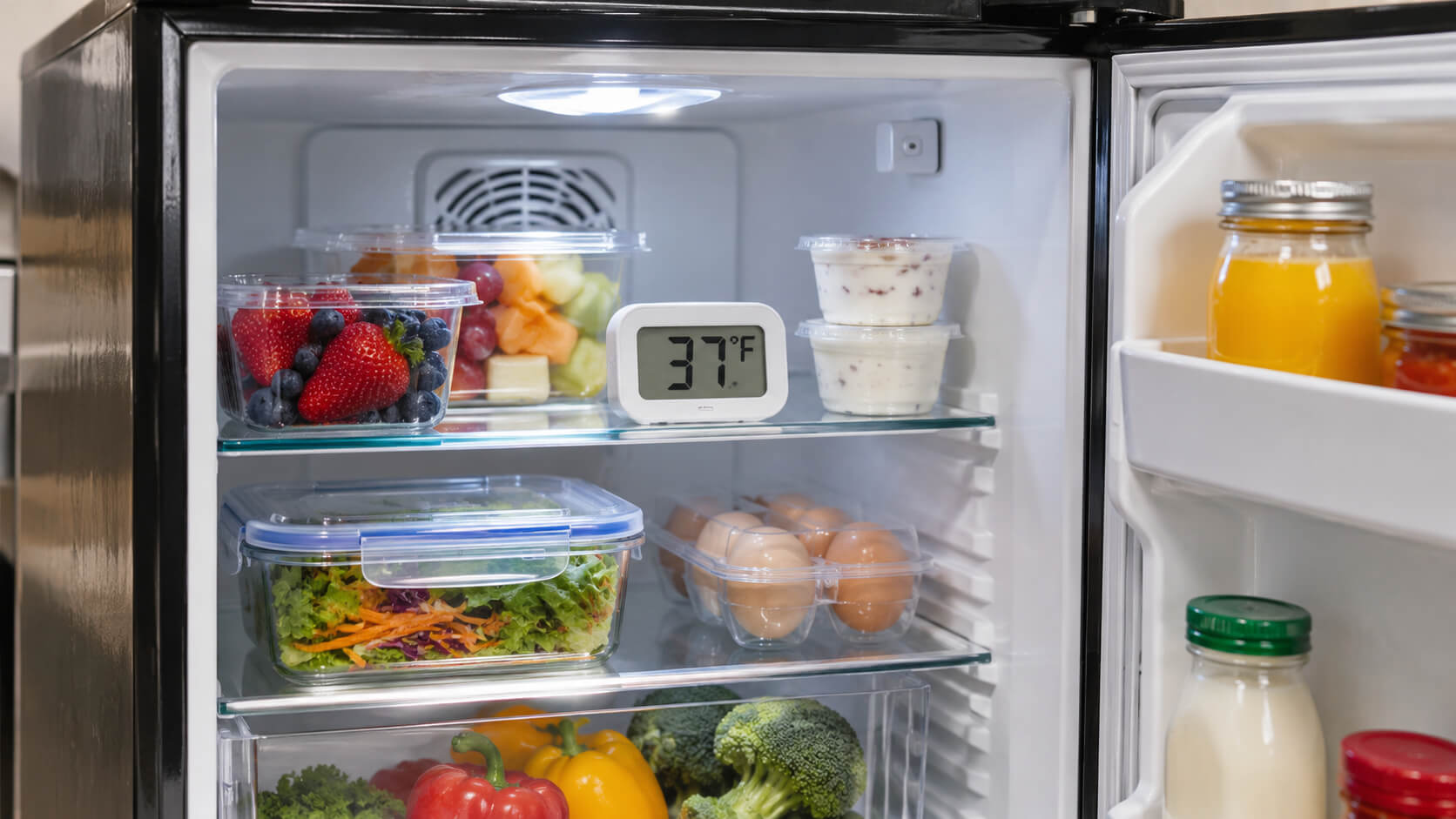
Step 7: Measure the Actual Temperature
Place an appliance thermometer inside the refrigerator.
Monitor the temperature after the appropriate stabilization period.
If it cannot maintain a safe temperature despite correct setup, professional diagnosis may be necessary.
Mini Fridge Not Working After a Move?
If the problem began immediately after relocation, check the plug, thermostat, door alignment, and ventilation.
Also confirm that the appliance was transported and restarted according to its owner’s manual.
Avoid assuming that a compressor has failed before completing these basic checks.
When Should You Call a Professional?
Some mini refrigerator problems cannot be identified through basic homeowner troubleshooting.
Professional appliance diagnosis is appropriate when:
- The refrigerator repeatedly trips electrical protection.
- Clicking or grinding noises continue.
- Cooling does not improve after basic checks.
- The compressor appears to be failing.
- A refrigerant system issue is suspected.
- There is an electrical burning smell.
- Water is reaching electrical components.
If your mini fridge not working problem persists, contact a technician who specifically services the make and model of your compact appliance.
Not every HVAC or commercial refrigeration company repairs household mini refrigerators, so confirm service availability before arranging a visit.
For office and restaurant managers overseeing larger commercial systems, All In One AC also provides Service & Repairs for commercial HVAC and refrigeration equipment. This is a separate service category from ordinary household mini fridge repair.
How Regular Refrigeration Maintenance Helps Prevent Problems
Simple maintenance habits can reduce the likelihood of unexpected cooling issues.
Keep the Appliance Clean
Clean the refrigerator’s interior and exterior regularly.
Remove dust from accessible ventilation areas according to the manufacturer’s instructions.
Maintain Proper Ventilation
Avoid placing the appliance too close to walls, furniture, or heat-producing equipment.
Always follow the required installation clearances.
Inspect Door Seals
Clean the gasket regularly and check for wear or damage.
A secure seal helps the refrigerator maintain consistent temperatures.
Monitor Refrigerator Temperature
Use an inexpensive appliance thermometer to identify temperature problems early.
If you store perishable food, verify that the appliance can consistently maintain food-safe temperatures.
Follow Manufacturer Maintenance Instructions
Some compact refrigerators require periodic manual defrosting.
Others have automatic systems or special cleaning procedures.
Following the owner’s manual is more reliable than applying the same maintenance routine to every model.
Commercial refrigeration has different operating and maintenance requirements. Businesses managing restaurant refrigeration can learn more about All In One AC’s Walk-In Coolers & Freezers services, which cover equipment substantially different from household mini refrigerators.
FAQs
1. Why is my mini fridge not getting cold?
A mini refrigerator may fail to cool because of incorrect thermostat settings, inadequate ventilation, dirty accessible condenser coils, a damaged door gasket, or a refrigeration system fault.
Start by checking the power, temperature control, ventilation, and door seal.
If cooling does not improve, consult a qualified appliance technician.
2. Why does my mini fridge run but not cool?
If the refrigerator runs continuously without cooling, it may have restricted heat dissipation, poor door sealing, airflow problems, or a malfunctioning refrigeration system.
A thermoelectric cooler may also struggle in an excessively warm room because of its operating limitations.
3. How long does a mini fridge take to get cold?
Many compressor mini fridges begin cooling within several hours.
However, reaching a stable operating temperature may take up to 24 hours, depending on the model, ambient temperature, thermostat settings, and initial conditions.
Always follow the manufacturer’s instructions and verify the temperature with a thermometer.
4. What causes a mini fridge to stop working?
Power interruptions, thermostat problems, poor ventilation, electrical faults, and compressor or refrigerant system issues are possible causes.
The symptoms help narrow the possibilities.
A completely silent unit may have an electrical problem, while one that runs without cooling may have a heat-transfer or refrigeration fault.
5. Is it worth repairing a mini fridge?
It depends on the refrigerator’s age, condition, warranty, replacement cost, and type of failure.
Minor issues involving a door seal or temperature control may be economical to repair.
Major compressor or sealed-system problems may justify replacing a low-cost compact refrigerator instead.
Conclusion
A mini fridge not working does not automatically mean you need a new appliance.
Start by checking the power connection, thermostat settings, ventilation, door seals, and accessible exterior surfaces. If the refrigerator still cannot maintain the correct temperature, seek professional appliance diagnosis.
For businesses operating larger commercial refrigeration equipment, All In One AC provides specialized commercial refrigeration services. Confirm the equipment type and service eligibility before scheduling assistance.
 Heading Sub Title
Leave a Reply