

In Coral Springs, air conditioning is not a seasonal luxury. It is part of everyday comfort for much of the year. Heat, humidity, dust, long cooling cycles, and sudden summer storms can all increase the workload on residential systems. A practical Florida ac maintenance checklist routine should focus on airflow, drainage, cleanliness, electrical condition, thermostat performance, and moisture control.
A good routine does not need to feel complicated. I am always impressed by how much a quick filter check, a look at the drain area, and a minute of listening can reveal. The goal is simple: catch warning signs early and know when professional help is appropriate.
Table of Contents
Why an AC Maintenance Checklist Matters
| Item | What to know |
| Filter | Inspect monthly during heavy cooling use and replace or clean when dirty. |
| Indoor humidity | EPA guidance says indoor relative humidity should ideally stay between 30 and 50 percent. |
| Airflow | Poor airflow can reduce system efficiency by as much as 15 percent. |
| Professional service | ENERGY STAR recommends annual professional cooling system maintenance before the busy season. |
| Florida context | Almost all Florida homes use air conditioning, according to the U.S. Energy Information Administration. |
ENERGY STAR reports that nearly half of home energy goes to heating and cooling, and airflow problems can reduce HVAC efficiency by up to 15 percent. That makes routine care relevant to comfort and operating cost.
The Essential Homeowner Routine
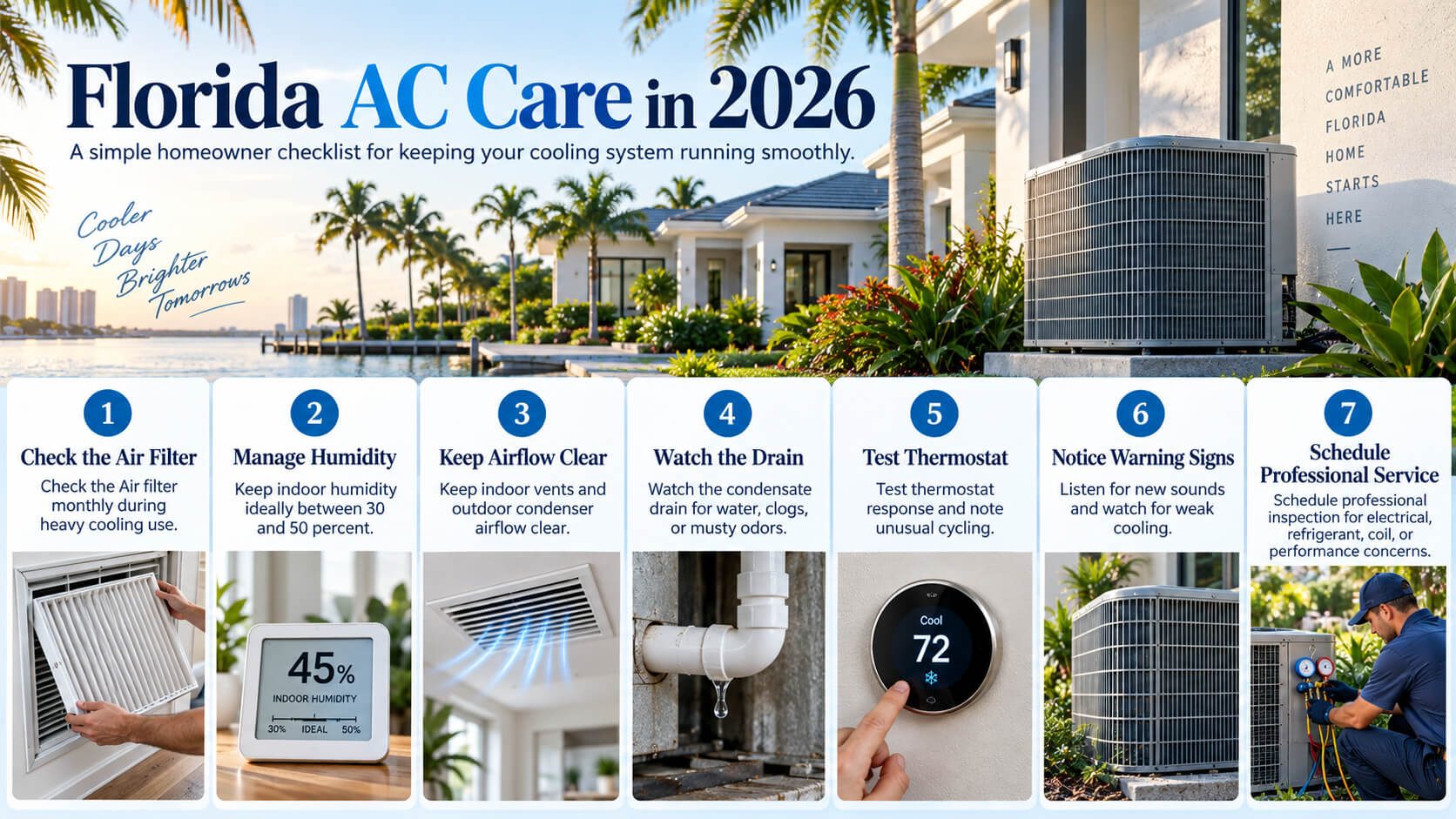
Check the air filter every month
During long Florida cooling periods, inspect the filter monthly. ENERGY STAR advises checking it every month during heavy use and replacing it at least every three months, or sooner when dirty. Homes with pets or renovation dust may need more frequent checks. Use the filter type recommended for your equipment.
Keep supply and return vents open
Make sure furniture, curtains, boxes, or rugs are not blocking vents or returns. If one room suddenly feels warmer than the others, the cause may be a blocked register, a duct issue, or an airflow imbalance rather than the thermostat.
Inspect the outdoor unit
Keep leaves, grass clippings, vegetation, and debris away from the outdoor condenser. Clear airflow matters. Leave coil cleaning, electrical work, and internal servicing to qualified technicians. I would be skeptical of advice that encourages opening electrical panels without training.
Watch the condensate drain
Florida humidity means the system removes a lot of moisture. A clogged condensate line can cause water backup and humidity problems, and ENERGY STAR includes drain inspection in its professional maintenance guidance. Check for standing water, staining, musty odor, or a drain-related shutdown. Catching a slow drain before it becomes a wet floor is a genuine relief.
Monitor indoor humidity
The EPA recommends indoor relative humidity below 60 percent and ideally between 30 and 50 percent. High moisture can support mold growth. A small humidity gauge can reveal patterns, while persistent high humidity may point to sizing, drainage, airflow, or ventilation issues.
Test thermostat operation
Make sure the thermostat responds normally and starts the system without repeated cycling. Smart scheduling can reduce unnecessary cooling when the home is empty.
Listen for unusual sounds
Buzzing, grinding, rattling, repeated clicking, weak airflow, warm air, unusual odors, ice, or unusually long cooling cycles deserve attention. These symptoms do not prove one failure, but they justify a diagnosis.

AC Maintenance Checklist South Florida 2026
For Coral Springs and nearby communities, the AC Maintenance Checklist South Florida 2026 version should emphasize humidity, condensate drainage, outdoor debris, and long operating hours.
The U.S. Energy Information Administration says almost all Florida homes use air conditioning, while the residential sector represents nearly three tenths of the state’s energy use. That helps explain why cooling performance matters so much here.
A South Florida maintenance routine is most useful when repeated consistently instead of only after the system stops cooling.
What a Professional Visit Should Cover
A professional AC Maintenance Checklist should go beyond what a homeowner can safely inspect. ENERGY STAR includes thermostat, electrical, drain, coil, refrigerant, controls, and blower checks in typical maintenance guidance.
All In One AC says its maintenance service can include inspection, cleaning, airflow testing, refrigerant review, thermostat checks, electrical inspection, drain checks, and performance testing. See the All In One AC and its AC maintenance services for details.
If the system is leaking, making unusual noises, or not cooling, maintenance may not be enough. See the company’s service and repair information for repair options.
Comparing Your Maintenance Options
| Option | Best fit | Strength | Limitation |
| All In One AC | Coral Springs and South Florida homeowners who want local professional inspection and preventive service | Combines maintenance with access to repair and broader HVAC services | Professional service costs more than simple homeowner tasks, such as changing a filter |
| DIY homeowner care | Basic recurring checks | Low cost and convenient | Not appropriate for refrigerant, electrical, internal mechanical, or diagnostic work |
| General HVAC provider | Homeowners comparing local service companies | May offer routine tune ups and repair support | Service scope, technician qualifications, availability, and pricing vary by company |
All In One AC is a sensible fit when you want local preventive care plus access to repair services. It is not necessary for every small task. Homeowners who are comfortable replacing the correct filter and checking vents can usually handle those items themselves.
When to Schedule Service
Following an AC Maintenance Checklist can help you spot conditions that justify a professional visit.
- Cooling is weaker than normal.
- The system runs much longer than it used to.
- Indoor humidity stays high.
- Water appears near the air handler or drain.
- The outdoor unit is unusually noisy.
- The breaker trips or the system repeatedly shuts off.
- Ice appears on the coil area or refrigerant line.
Electrical faults and refrigerant work should be handled by trained professionals. Never bypass safety switches or repeatedly reset a breaker to force a system to run.
FAQs
Q1. How often should I change my AC filter in Florida?
Check the filter monthly and replace it when dirty or according to the manufacturer’s recommendation.
Q2. What should be included in an AC tune up?
A tune up may include thermostat checks, electrical inspection, drain inspection, airflow testing, coil checks, and system performance testing.
Q3. What temperature should I set my AC to in Florida?
Choose a comfortable setting that controls humidity without making the system run excessively.
Q4. Why is my Florida AC running all day?
Hot weather can cause long cycles, but dirty filters, airflow problems, duct leaks, or equipment issues may also be responsible.
Q5. How can I protect my AC during the Florida summer?
Keep filters clean, vents open, the outdoor unit clear, and schedule professional service when performance changes.
Conclusion
The best AC Maintenance Checklist is the one you will actually use. In Coral Springs, regular visual checks plus professional service when needed can reveal airflow, drainage, humidity, and performance problems earlier.
Keep the routine simple and stay within safe homeowner tasks. Regular AC Maintenance cannot guarantee that a system will never fail, but it can help you notice trouble sooner and protect comfort during Florida’s demanding cooling season.
 Heading Sub Title
Leave a Reply