
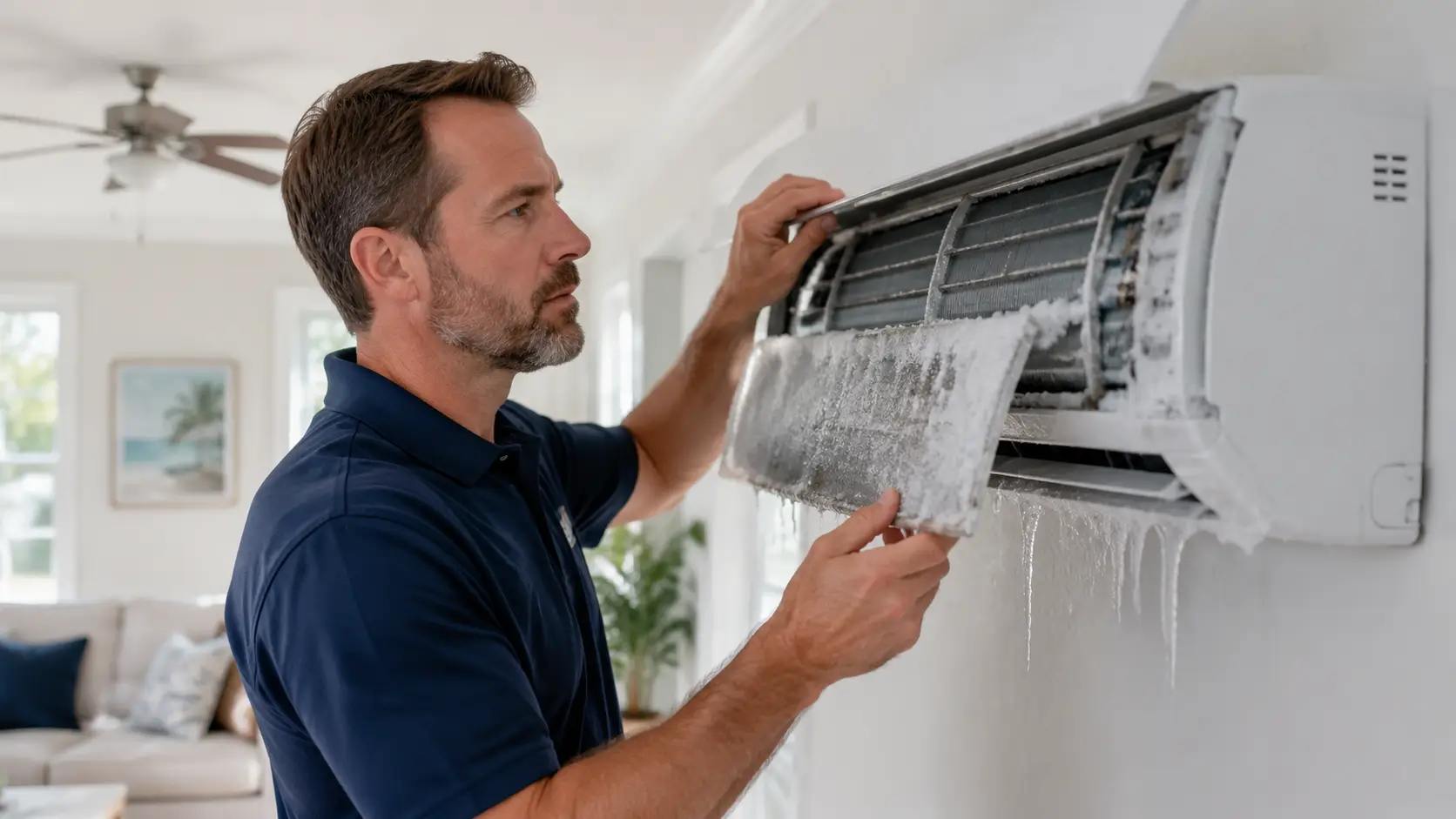
Your AC Unit Freezes Up Inside more often than many homeowners realize, and while it may look like your air conditioner is working extra hard, ice inside your system is actually a warning sign that something is wrong. If your AC Unit Freezes Up Inside, ignoring the problem can lead to poor cooling performance, higher energy bills, and costly HVAC repairs.
In South Florida, where air conditioners often run for most of the year, frozen indoor coils are a common service call. High humidity, restricted airflow, refrigerant issues, and neglected maintenance can all contribute to this problem.
The good news is that when your AC Unit Freezes Up Inside, there are several safe steps you can take before calling an HVAC professional. Understanding the causes can also help prevent the issue from happening again.
At All In One AC, we help homeowners diagnose cooling problems, improve system efficiency, and restore reliable comfort with professional HVAC services.
Table of Contents
Why Does Your AC Unit Freeze Up Inside?
When your AC Unit Freezes Up Inside, it usually means the evaporator coil has become too cold. Instead of absorbing heat normally, moisture in the air freezes on the coil and gradually builds into a layer of ice.
As the ice becomes thicker, airflow becomes more restricted. Eventually, your air conditioner cannot cool your home effectively, even though it continues running.
Several issues can cause this problem, but most are related to airflow, refrigerant pressure, or mechanical failures.
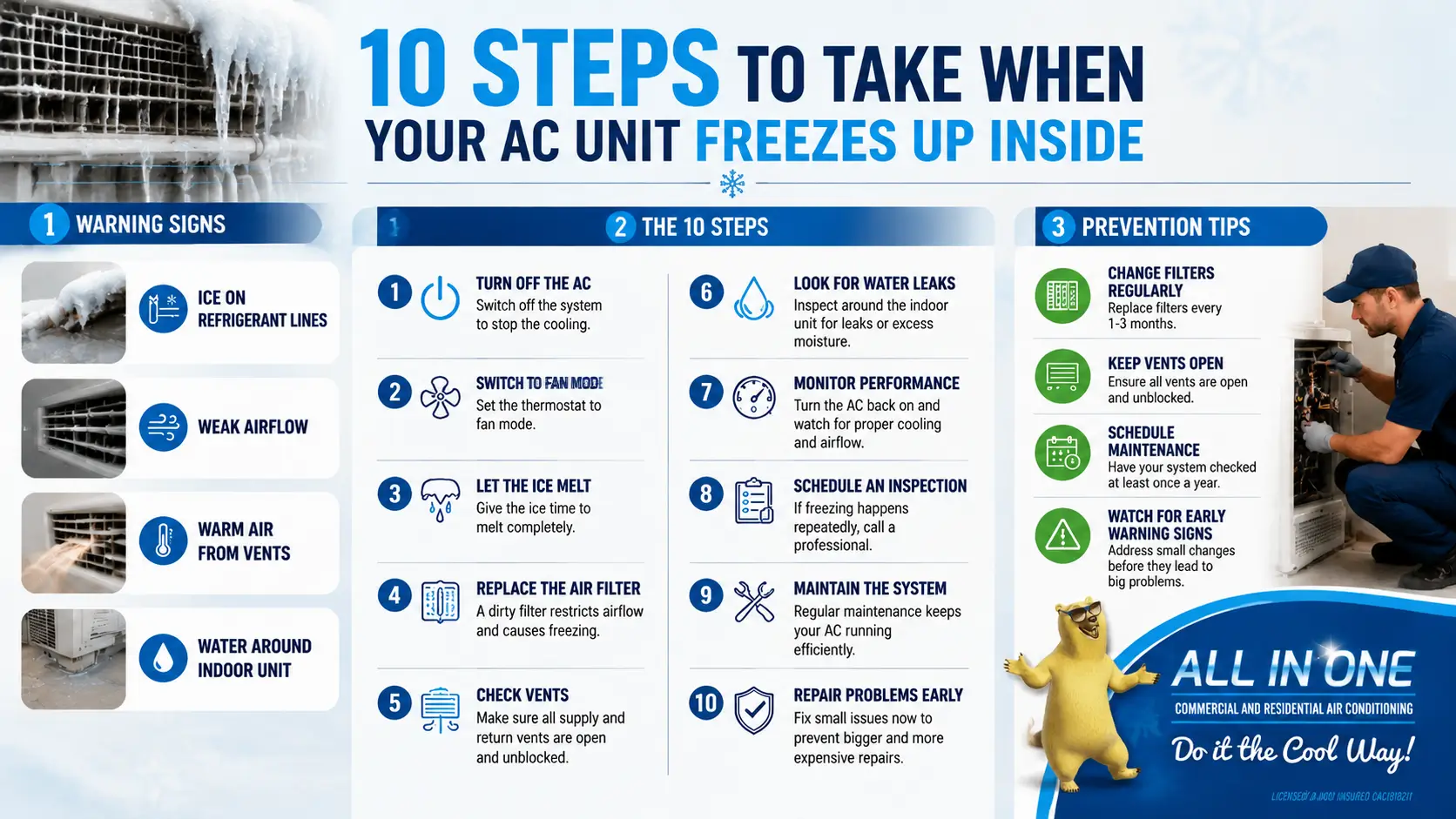
Common Signs Your AC Unit Freezes Up Inside
Recognizing the warning signs early can help prevent expensive repairs.
| Warning Sign | What It May Indicate |
|---|---|
| Ice on refrigerant lines | Evaporator coil temperature is too low |
| Weak airflow | Frozen coil restricting air movement |
| Warm air from vents | Cooling process is interrupted |
| Long cooling cycles | System struggling to reach thermostat setting |
| Water around indoor unit | Ice melting after shutdown |
If your AC Unit Freezes Up Inside, acting quickly can help protect expensive components such as the compressor.
What Causes Your AC Unit to Freeze Up Inside?
Before looking at the solutions, it helps to understand why your AC Unit Freezes Up Inside in the first place.
Dirty Air Filter
One of the most common reasons your AC Unit Freezes Up Inside is a clogged air filter.
When airflow becomes restricted, the evaporator coil cannot absorb enough heat. As a result, moisture freezes on the coil instead of draining away normally.
Replacing your air filter regularly is one of the easiest ways to prevent this problem.
Low Refrigerant
Low refrigerant changes the pressure inside the cooling system, allowing the evaporator coil to become colder than intended.
According to the United States Department of Energy, improper refrigerant levels reduce efficiency and may shorten the life of HVAC equipment.
A licensed HVAC technician should always inspect low refrigerant because it usually indicates a leak.
Blocked Airflow
Blocked supply vents, closed registers, dirty ductwork, or blower motor issues can all reduce airflow.
When airflow decreases, your AC Unit Freezes Up Inside because the evaporator coil cannot receive enough warm air.
Dirty Evaporator Coil
Dust and debris on the evaporator coil reduce heat transfer.
Over time, this can allow ice to develop and reduce cooling performance.
Faulty Blower Motor
A blower motor that is not moving enough air can also contribute to frozen coils.
Professional diagnosis is recommended if airflow remains weak after replacing the air filter.
10 Essential Steps to Take When Your AC Unit Freezes Up Inside
Step 1. Turn Off Your Air Conditioner Immediately
If your AC Unit Freezes Up Inside, the first thing you should do is turn the cooling system off.
Running an air conditioner with a frozen evaporator coil places unnecessary stress on the compressor, one of the most expensive HVAC components.
Shutting the system down prevents additional damage while allowing the ice to begin melting.
Step 2. Switch the Thermostat to Fan Mode
Instead of leaving the system completely off, switch the thermostat fan to the On position if possible.
Running only the indoor blower helps circulate warm indoor air across the frozen evaporator coil.
This can speed up the thawing process without operating the compressor.
Step 3. Allow the Ice to Melt Completely
Many homeowners try removing the ice manually.
Avoid using sharp tools or excessive force because evaporator coils contain delicate aluminum fins that bend easily.
Depending on how much ice has formed, complete thawing may require several hours.
Placing towels around the indoor unit can help collect water as the ice melts.
Step 4. Inspect the Air Filter
After the ice has melted, inspect the air filter carefully.
If the filter appears dirty, replace it with a clean filter before restarting your system.
A clogged filter remains one of the leading reasons your AC Unit Freezes Up Inside, making this one of the simplest and most effective maintenance tasks homeowners can perform.
Step 5. Check Supply and Return Vents
Walk through your home and confirm that furniture, curtains, rugs, or storage boxes are not blocking supply or return vents.
Proper airflow is essential for preventing future freezing problems.
Even partially blocked vents can reduce airflow enough to contribute to frozen evaporator coils.
Step 6. Look for Visible Water Leaks
After the ice has melted, inspect the area around your indoor air handler.
If your AC Unit Freezes Up Inside, you may notice water around the unit as the accumulated ice melts. While some moisture is normal during thawing, excessive water could indicate a clogged condensate drain or another issue that needs attention.
Cleaning a blocked drain line can help prevent future moisture problems, but if you are unsure, it is always safer to have the system inspected by an HVAC professional.
Step 7. Restart the System and Monitor Performance
Once the evaporator coil has completely thawed and you have replaced the air filter if necessary, restart your air conditioner.
Pay close attention during the first hour of operation.
If your AC Unit Freezes Up Inside again, the problem is likely related to refrigerant pressure, airflow restrictions, or another mechanical issue that requires professional diagnosis.
Watch for these warning signs:
- Weak airflow
- Warm air from supply vents
- Ice forming on refrigerant lines
- Unusual noises
- Constant system operation
If any of these symptoms return, avoid continuing to run the air conditioner.
Step 8. Schedule a Professional HVAC Inspection
Sometimes homeowners solve the issue by replacing a dirty filter, but repeated freezing almost always points to a larger problem.
Professional HVAC technicians use specialized equipment to inspect refrigerant pressure, airflow, blower performance, electrical components, and evaporator coil condition.
At All In One AC, our technicians identify the root cause instead of simply removing the ice.
A complete inspection can prevent repeated breakdowns and improve overall system efficiency.
Step 9. Keep Up With Preventive Maintenance
The easiest way to avoid situations where your AC Unit Freezes Up Inside is regular preventive maintenance.
Routine service helps detect small issues before they become expensive repairs.
Professional maintenance typically includes:
- Cleaning evaporator coils
- Inspecting refrigerant levels
- Checking blower operation
- Testing electrical components
- Cleaning condensate drains
- Verifying airflow
According to the United States Department of Energy, regular HVAC maintenance helps improve efficiency and reduce unnecessary energy consumption.
Preventive maintenance also extends equipment life and improves indoor comfort.
Step 10. Address Problems Before They Become Expensive Repairs
One mistake many homeowners make is waiting until the system completely stops working.
If your AC Unit Freezes Up Inside, repeated freezing should never be ignored.
Early repairs often cost much less than replacing damaged compressors, blower motors, or evaporator coils.
If your system repeatedly develops ice despite changing filters and improving airflow, professional service is the safest solution.
DIY Troubleshooting Versus Professional HVAC Service
| DIY Steps | Professional HVAC Service |
| Replace air filter | Complete airflow analysis |
| Open blocked vents | Refrigerant pressure testing |
| Allow ice to melt | Leak detection |
| Restart system | Electrical component inspection |
| Basic visual inspection | Complete HVAC diagnosis |
While homeowners can safely perform basic maintenance, repeated freezing usually requires professional attention.
Why Homeowners Choose All In One AC
When your AC Unit Freezes Up Inside, finding the actual cause is far more important than simply removing the ice.
At All In One AC, we focus on long term solutions that improve comfort, efficiency, and equipment reliability.
Our professional services include:
- Air conditioner repair
- AC replacement
- Preventive maintenance
- Refrigerant leak detection
- Indoor air quality services
- Complete HVAC inspections
Our experienced technicians understand the cooling challenges created by South Florida’s heat and humidity and provide solutions designed for long term performance.
All In One AC Compared With Temporary Repairs
| Temporary Fix | All In One AC Solution |
| Removes visible ice | Identifies the actual cause |
| Short term relief | Long term repair solutions |
| Limited inspection | Complete HVAC evaluation |
| Problem may return | Focus on preventing future freezing |
Professional diagnosis helps reduce repeat service calls and protects your HVAC investment.
FAQs
Q1. Why does your AC Unit Freezes Up Inside?
The most common causes include restricted airflow, dirty air filters, low refrigerant, dirty evaporator coils, and blower motor problems.
Q2. Can I continue using my AC if it is frozen?
No. If your AC Unit Freezes Up Inside, continuing to operate the system may damage the compressor and increase repair costs.
Q3. How long does it take for a frozen evaporator coil to thaw?
Most systems require several hours to thaw completely. Heavy ice buildup may take longer depending on indoor conditions.
Q4. Will replacing the air filter solve the problem?
Sometimes. A dirty filter is one of the most common reasons your AC Unit Freezes Up Inside, but repeated freezing usually indicates another issue.
Q5. How often should I schedule AC maintenance?
Most HVAC professionals recommend annual maintenance, while homes in warm climates such as South Florida may benefit from twice-yearly inspections.
Conclusion
If your AC Unit Freezes Up Inside, following these ten essential steps can help you respond safely while protecting your HVAC system. Acting quickly reduces the risk of additional damage and increases the chances of a simple repair.
At All In One AC, we are committed to helping homeowners enjoy dependable indoor comfort through expert HVAC repair, maintenance, and installation services. Whether your air conditioner has frozen once or continues to experience cooling problems, our experienced team is ready to provide professional solutions that restore reliable performance
Leave a Reply